
Product page
Timing belt SKF PHG DA-920-8M-S180
- Manufacturer Part Number
- PHG DA-920-8M-S180
- Brand
- SKFOfficial brand
- Category
- Power transmission
- Subcategory
- Timing belts

We respond promptly.
Request your quote via WhatsApp or email, with the quantity and time frame you need.
Can't find the exact model? Write to us with the part number or model you're looking for: we'll find it and quote it, even if it's not listed in the catalog.
Description
SKF PHG DA-920-8M-S180 is a timing belt reference, within Power transmission. Request a quote for PHG DA-920-8M-S180 via WhatsApp or email with the quantity you need; we respond promptly with lead time and equivalents.
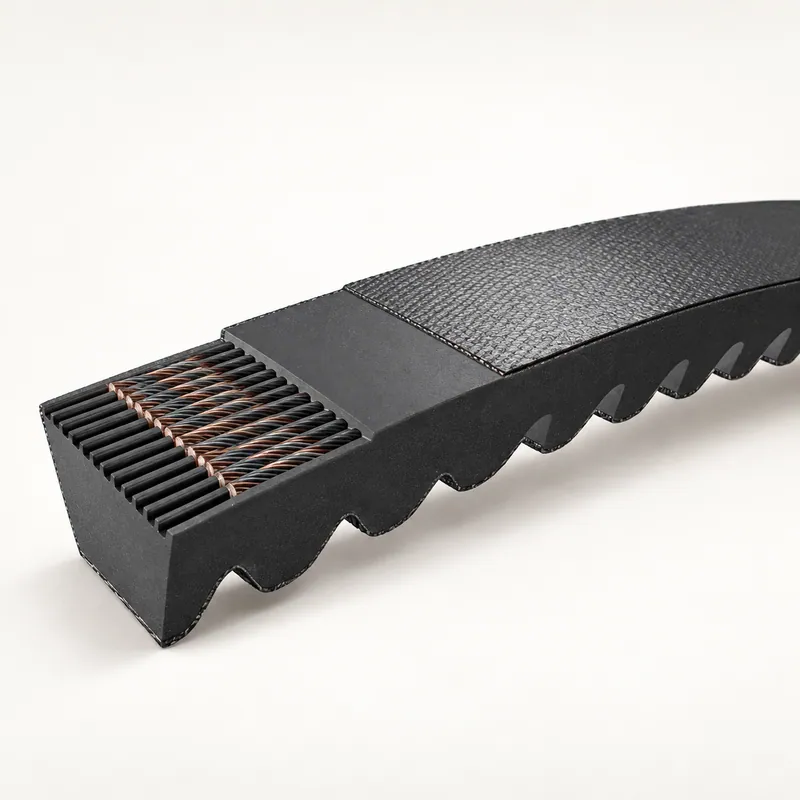
SKF timing belts from the PHG DA line are toothed transmission elements that mesh with pulleys of the same pitch to deliver synchronized motion without slipping. They are used when the transmission ratio must remain exact and speeds are moderate or high. MR Accesorios Industriales carries this line as an official brand, backed by more than 80 years in the field.
The designation PHG DA-#M-S… is read in parts. PHG DA identifies the toothed-profile timing belt family. The central number, for example 575, 850 or 1080, indicates the pitch length in millimeters. The number before the M, such as 5M or 8M, defines the pitch: 5 mm or 8 mm. The suffix S followed by a number, such as S180 or S190, corresponds to the belt width in hundredths of an inch. Thus, PHG DA-640-8M-S180 is a belt with 8M pitch, 640 mm length and 1.80" width.
These belts are used in transmissions where slipping is not allowed: machine tool spindles, camshafts, vacuum pumps, compressors, packaging equipment and assembly lines. In Argentina they appear in the metalworking, food, plastics, ceramics and automotive sectors, both in new machines and in replacement of imported equipment. They are also used in mixers, agitators and light conveyors where synchronization and low maintenance are sought.
To select correctly, verify the pitch and the number of teeth on the pulley: the profile must match. The pitch length is chosen according to the center distance and the possibility of adjusting it. The width depends on the torque to be transmitted and the pulley diameter. During installation, align the pulleys with a straightedge or laser, do not force the belt with tools, and verify tension according to the equipment manual. Low tension causes tooth jumping; excessive tension stresses bearings and shafts.
SKF timing belts are interchangeable with other brands that use the same pitch and length nomenclature, such as 5M, 8M or 14M. The key is to respect pitch, pitch length and width. If the original code is not available, it can be replaced by an equivalent from another brand while maintaining those three variables. Do not invent combinations: if in doubt, consult the manufacturer or a technical distributor.
To request a quote, send the complete belt code via WhatsApp to MR Accesorios Industriales. If you do not have it at hand, provide the pitch, pitch length and width, or a photo of the old belt next to a ruler. That way we can confirm the equivalence and give you the option that best fits your equipment.
This description provides guidance on the product type. Check the configuration and dimensions of this reference.
Dimensions
Dimensions and tolerances: Send us the part number via WhatsApp and we'll confirm dimensions, sealing, and internal clearance against the manufacturer's data sheet.
Frequently Asked Questions
- How do I know which SKF PHG DA timing belt I need?
- You need the pitch (5M, 8M, etc.), the pitch length in millimeters and the width. That data is in the code stamped on the belt. If you cannot find it, measure with a caliper or send a photo with a reference.
- Can I replace a belt from another brand with an SKF PHG DA?
- Yes, if pitch, pitch length and width match. The pitch and length nomenclature is standard among manufacturers. It is still advisable to verify the tooth profile and length tolerance before installing.
- How often should a timing belt be changed?
- There is no fixed interval: it depends on load, alignment and pulley condition. It is replaced when it shows tooth wear, cracks, loss of tension or abnormal noise. Check it at every preventive maintenance.