
Product page
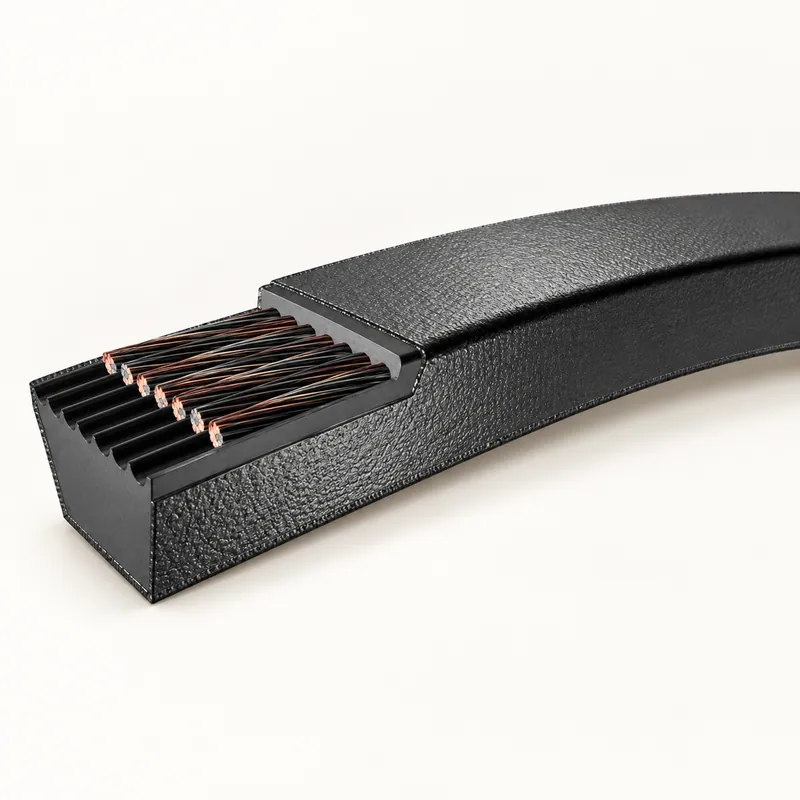
V-belt SKF PHG D105
- Manufacturer Part Number
- PHG D105
- Brand
- SKFOfficial brand
- Category
- Power transmission
- Subcategory
- V-belts

We respond promptly.
Request your quote via WhatsApp or email, with the quantity and time frame you need.
Can't find the exact model? Write to us with the part number or model you're looking for: we'll find it and quote it, even if it's not listed in the catalog.
Description
SKF PHG D105 is a v-belt reference, within Power transmission. Request a quote for PHG D105 via WhatsApp or email with the quantity you need; we respond promptly with lead time and equivalents.
The SKF D section classic V-belt is a power transmission component used to link pulleys and transmit motion between shafts. Its V profile fits into the pulley grooves and allows driving loads in industrial equipment. MR Accesorios Industriales sells this SKF belt line in Buenos Aires, Argentina, and helps you identify the correct code for your application.
The designation of this series is read in parts: PHG identifies the family of classic V-belts, the letter D indicates the cross section, and the number that follows —for example, in PHG D98 or PHG D110— corresponds to the nominal length of the belt. The examples PHG D102, PHG D104 and PHG D105 show how that number changes according to the size. The D section is one of the most robust among classic belts and is chosen when power must be transmitted with larger diameter pulleys.
These belts are used in a wide variety of industries in Argentina: food plants, mills, centrifugal pumps, fans, compressors, conveyor belts and process equipment. They also appear in the metallurgical and chemical sectors and in maintenance workshops that need to replace worn belts without stopping production. As a wear component, periodic replacement is key to avoiding unscheduled downtime.
To properly select a D section belt, take into account the power to be transmitted, the rotation speed and the pulley diameter. Verify that the length matches the center distance and that the pulleys are aligned to avoid irregular wear. The tension must be adequate: too low causes slipping, too high overloads the bearings. Also check the condition of the pulley grooves, because wear accelerates belt deterioration.
Regarding equivalences, classic V-belts are identified by their section and nominal length, and different brands may offer equivalent products under their own nomenclatures. If you need to replace an existing belt, the safest is to compare the section and the length engraved on the old product. MR Accesorios Industriales can guide you to find the SKF reference that corresponds to your size.
To request a quote for the belt you need, send us via WhatsApp the complete code that appears on the current belt or in the equipment manual, for example PHG D102 or PHG D118. If you don't have it at hand, send us the section, the length and a photo of the pulley. That way we quickly confirm the available SKF reference and advise you on installation.
This description provides guidance on the product type. Check the configuration and dimensions of this reference.
Dimensions
- Section
- D
- Type
- Clásica
Frequently Asked Questions
- How do I know which SKF V-belt I need?
- Look at the inscription on the old belt: there you will find the section (in this case D) and the nominal length. If you can't find it, measure the outside length and the top width. With that data and the type of pulley we can identify the equivalent SKF reference.
- What does PHG mean in the belt code?
- PHG identifies the family of classic V-belts within the SKF line. The following letter indicates the cross section, and the final number is the nominal length. For example, in PHG D102, the D is the section and 102 is the length size.
- How do I know if the belt is properly tensioned?
- The correct tension allows a slight flex when pressing with a finger on the longest span, without the belt slipping on start-up. If it whistles or gets hot, it may be loose; if the bearings are overloaded, it may be too tight. Follow the equipment manufacturer's recommendations.