
Product page
Timing belt SKF PHG D-230-XL-025
- Manufacturer Part Number
- PHG D-230-XL-025
- Brand
- SKFOfficial brand
- Category
- Power transmission
- Subcategory
- Timing belts

We respond promptly.
Request your quote via WhatsApp or email, with the quantity and time frame you need.
Can't find the exact model? Write to us with the part number or model you're looking for: we'll find it and quote it, even if it's not listed in the catalog.
Description
SKF PHG D-230-XL-025 is a timing belt reference, within Power transmission. Request a quote for PHG D-230-XL-025 via WhatsApp or email with the quantity you need; we respond promptly with lead time and equivalents.
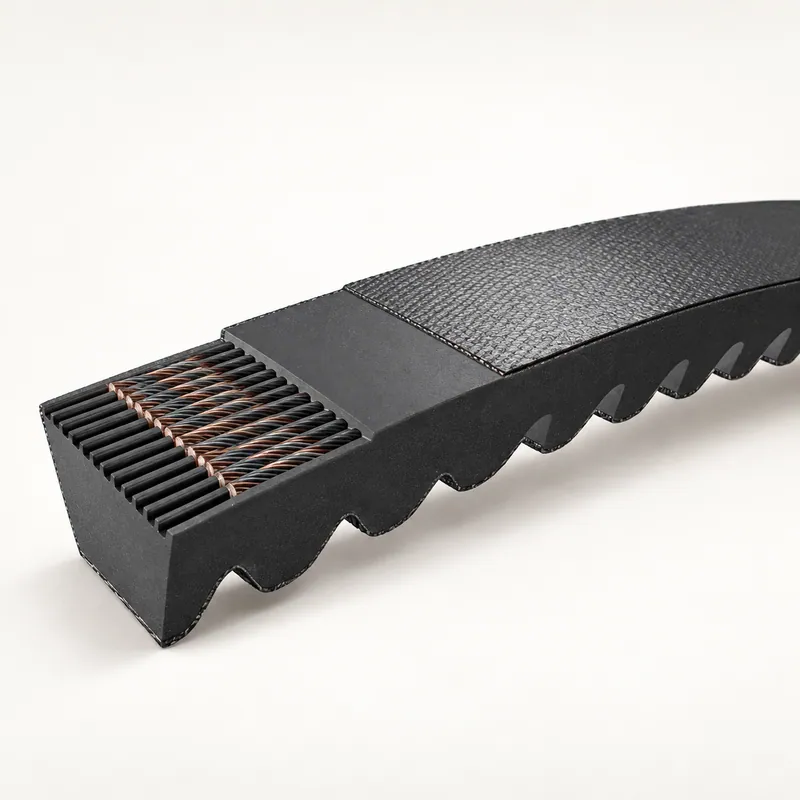
SKF PHG D-XL series timing belts are power transmission components that combine the flexibility of a belt with the precision of a gear. They are used to synchronize shafts and transmit motion without slipping, which makes them ideal for applications where rotational accuracy is critical. At MR Accesorios Industriales we carry them as part of our power transmission line.
The designation of these belts follows a clear pattern: PHG D-200-XL-025. The prefix PHG D identifies the family of trapezoidal profile timing belts. The following number, in this case 200, indicates the pitch length in tenths of an inch. Then comes XL, which defines the pitch and tooth profile. The last group, 025, corresponds to the belt width in inches. Thus, PHG D-210-XL-031 is a belt with a 21-inch pitch, XL profile and 0.31-inch width. Knowing this nomenclature allows you to order the exact replacement.
These belts are used in a wide variety of industries in Argentina. They are common in machine tools, packaging equipment, industrial printers, positioning systems and multi-shaft drives. They also appear in the food, textile and automotive industries, where synchronism between camshafts or drive shafts is required. Their ability to run at moderate and high speeds, with low noise and without lubrication, makes them versatile for dusty or humid environments.
To select the right belt, take into account the power to be transmitted, the rotational speed and the center distance. It is essential that the pulleys have the same pitch and profile as the belt; otherwise, the meshing will be poor and service life will be reduced. Installation must be done with the correct tension: too loose, the belt skips teeth; too tight, the bearings are overloaded. Check pulley alignment with a straightedge or laser to avoid uneven wear.
As for lubrication, timing belts do not require lubricant and must be kept free of oils or greases that could degrade the compound. Cleaning with a dry cloth is sufficient. If the environment has extreme temperatures, consult the manufacturer's specifications. Interchangeability between brands is possible if the pitch, profile and width match, but always verify the complete designation. Do not invent codes: follow the standard nomenclature.
To request a quote for the belt you need, send us the complete code via WhatsApp. At MR Accesorios Industriales we have more than 80 years of experience in power transmission and can advise you so you choose the right option. Write to us and we will reply shortly.
This description provides guidance on the product type. Check the configuration and dimensions of this reference.
Dimensions
Dimensions and tolerances: Send us the part number via WhatsApp and we'll confirm dimensions, sealing, and internal clearance against the manufacturer's data sheet.
Frequently Asked Questions
- What does the designation PHG D-200-XL-025 mean?
- PHG D indicates the timing belt family, 200 is the pitch length in tenths of an inch (20 inches), XL defines the tooth profile and pitch, and 025 is the width in inches (0.25 inches).
- Can they be used instead of chains or gears?
- Yes, in many applications they replace chains due to their lower noise and maintenance, or gears when transmission between distant shafts is needed. Always verify the load capacity and working conditions.
- How do I know if the tension is correct?
- The proper tension allows a slight deflection when pressing with a finger at the center of the longest span. If it skips teeth, it is loose; if the bearings heat up, it is tight. Consult the machine manual.