
Product page
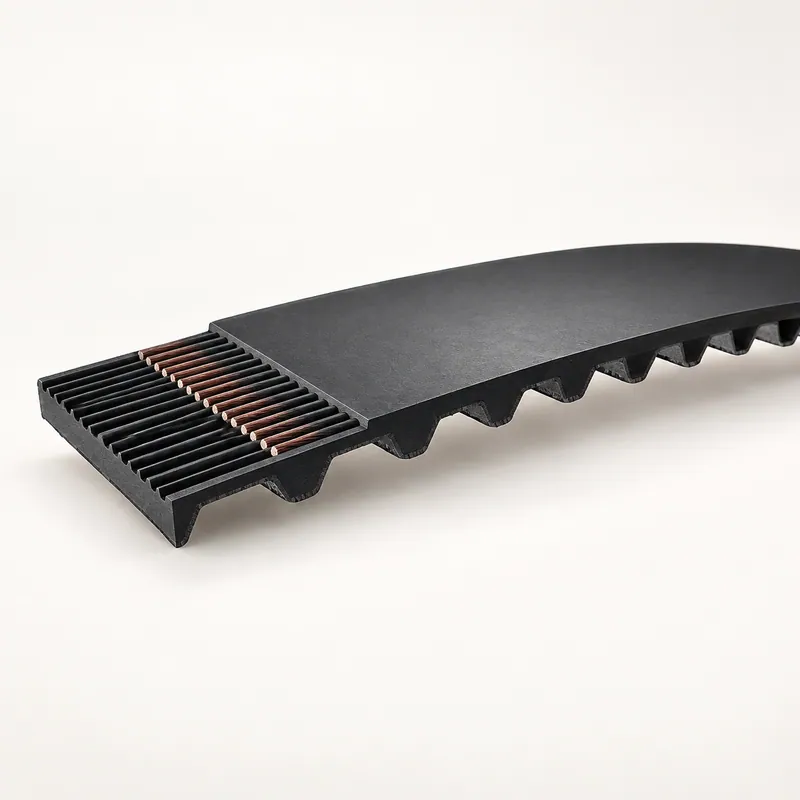
Timing belt SKF PHG 900-XXH-200
- Manufacturer Part Number
- PHG 900-XXH-200
- Brand
- SKFOfficial brand
- Category
- Power transmission
- Subcategory
- Timing belts

We respond promptly.
Request your quote via WhatsApp or email, with the quantity and time frame you need.
Can't find the exact model? Write to us with the part number or model you're looking for: we'll find it and quote it, even if it's not listed in the catalog.
Description
SKF PHG 900-XXH-200 is a timing belt reference, within Power transmission. Request a quote for PHG 900-XXH-200 via WhatsApp or email with the quantity you need; we respond promptly with lead time and equivalents.
SKF timing belts from the PHG line with XXH profile are power transmission components that combine the flexibility of a belt with the precision of a gear. They are used to synchronize shafts and transmit motion without slipping in equipment where rotational accuracy is critical. MR Accesorios Industriales carries this line as part of its power transmission catalog, with technical advice to choose the right size.
The designation of these belts is read in parts. The prefix PHG identifies the SKF timing belt line. Then a number indicates the pitch length in tenths of an inch: for example, in PHG 800-XXH-300, the 800 corresponds to 80 inches of pitch. The XXH profile defines the tooth type, in this case an extra extra heavy profile. The last number, such as 300 or 200, indicates the belt width in hundredths of an inch. Thus, PHG 900-XXH-200 has 90 inches of pitch and 2 inches of width.
These belts are used in industries that require synchronized, high-load transmission. In Argentina, they are common in the metalworking industry, in machine tools, in printing equipment, in the textile industry and in internal conveying systems. They also appear in high-flow pumps, compressors and process equipment where slipping is not allowed. Their rugged construction makes them suitable for environments with the presence of oils and moderate temperatures, as long as installation conditions are respected.
To select a timing belt, take into account the power to be transmitted, the rotational speed, the center distance and the type of pulley. The XXH profile requires pulleys with the same pitch and compatible width. It is essential to verify pulley alignment and proper tension: low tension accelerates wear and can cause tooth jumping; excessive tension overloads the bearings. Lubrication does not apply to the belt, but it does to the associated components. Periodically check the condition of the teeth and the presence of cracks.
As for equivalences, timing belts are identified by their pitch, profile and width, so a belt from another brand with the same dimensional designation may be interchangeable. However, differences in the rubber compound, the tensile cord or the tolerances can affect performance. Whenever possible, keep the same brand and line to ensure uniform operation. If you need to replace an existing belt, the full part number stamped on the back is the most reliable data.
To request a quote for the SKF PHG XXH timing belt you need, send the full part number by WhatsApp to MR Accesorios Industriales. If you don't have it on hand, we can help you identify it from the pitch size, width and profile. Our technical team advises you so that the belt is the right one for your equipment.
This description provides guidance on the product type. Check the configuration and dimensions of this reference.
Dimensions
- Perfil
- XXH
Frequently Asked Questions
- How do I identify the profile and size of a timing belt?
- The part number stamped on the back indicates the pitch length, the profile and the width. For example, PHG 800-XXH-300 corresponds to 80 inches of pitch, XXH profile and 3 inches of width. If you can't see the part number, measure the center distance and count the teeth.
- What is the difference between the XH and XXH profiles?
- The XXH profile has a larger pitch and taller teeth than the XH, which allows it to transmit more power per inch of width. It is used in high-load, low-speed applications. The choice depends on the power and the available space.
- How do I know if the belt tension is correct?
- Proper tension allows a slight deflection when pressing with your finger at the center of the longest span. Too low a tension causes tooth jumping; too high a tension overloads the bearings. Consult the equipment manual or use a tension gauge.