
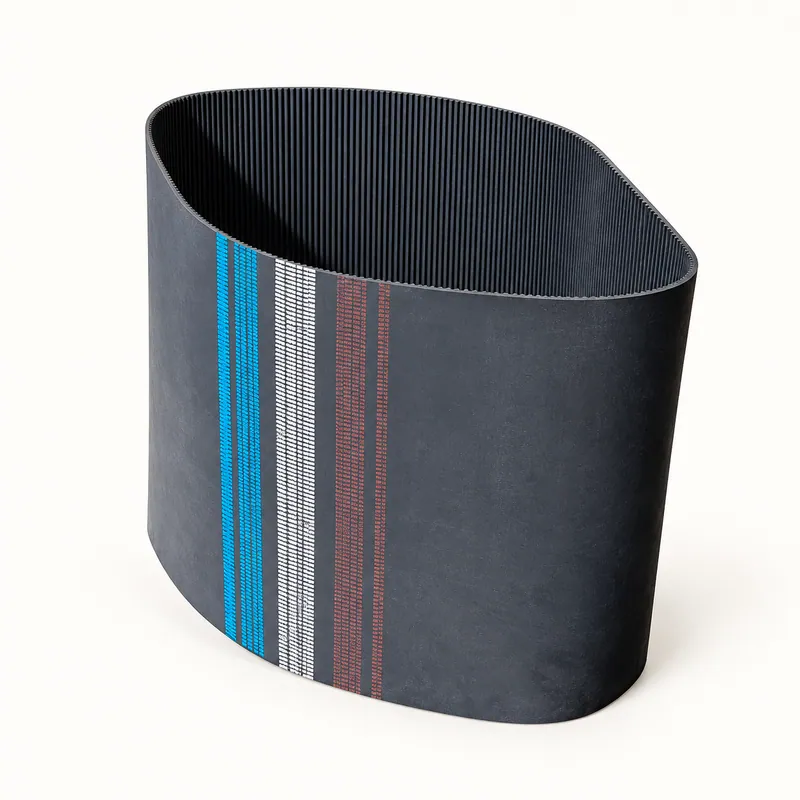

SKF PHG 801-3M-S450 timing belt
- Brand
- SKF
- Category
- Power transmission
- Subcategory
- Timing belts
We respond promptly.
Since 1945 · Martínez, Buenos Aires, Argentina
Request your quote via WhatsApp or email, with the quantity you need.
Can't find the exact model? Write to us with the part number or model you're looking for: we'll find it and quote it, even if it's not listed in the catalog.
Description
SKF PHG 801-3M-S450 is a reference of timing belt, within Power transmission. Request a quote for PHG 801-3M-S450 via WhatsApp or email with the quantity you need; we respond promptly with the quote and equivalents.
SKF timing belts in the PHG line are toothed drive elements that mesh with pulleys of the same pitch, achieving a constant speed ratio without slipping. They are used when shafts need to be synchronized, an exact angular position maintained, or force transmitted with low noise and no tension maintenance. MR Accesorios Industriales sells this line for industrial and automation applications.
The PHG …M-S… designation is read as follows: PHG identifies the SKF timing belt line; the number before the M indicates the pitch length in millimeters; the profile and pitch are indicated by the code (for example, 3M for 3 mm); and the S suffix with the final number defines the belt width. For example, PHG 81-3M-S60 is a belt with a pitch length of 81 mm, 3M profile and 60 hundredths of an inch in width, while PHG 141-3M-S200 combines a 141 mm pitch with a larger width. Always verify the complete code before ordering.
These belts are used in drives where synchronization is critical: machine tool shafts, printing heads, packaging equipment, dosing systems, robotics and automation. In Argentina you will find them in food, textile, plastics and wood production lines, where repeatability and low maintenance are required. They are also used in pumps, compressors and fans that require constant speed and do not allow slipping.
To select correctly, match the pitch length, profile and width with the corresponding pulley. The profile indicated in the code requires pulleys of the same pitch, and the width must match the groove. During installation, align the pulleys precisely, do not force the belt over the teeth and verify tension according to the equipment manual. Low tension accelerates wear; excessive tension stresses bearings and shafts. Keep the drive clean and free of oils that degrade the compound.
As for equivalences, timing belts are identified by profile, pitch and length, and different brands offer interchangeability if those three data points and the width match. It is not enough for the code to look similar: the complete designation and the tooth type must be compared. If you have doubts, send us the original code and the pulley dimensions, and we will help you find the equivalent.
To request a quote, send the complete belt code by WhatsApp, for example PHG 117-3M-S160, or the pitch, profile and width dimensions. At MR Accesorios Industriales we advise you so that you order the correct belt and avoid downtime caused by a rushed choice. We can also review the pulley and the general condition of the drive if you send us the data.
Dimensions
Dimensions and tolerances: Send us the part number via WhatsApp and we'll confirm the dimensions and version against the manufacturer's data sheet.
Frequently Asked Questions
- What does the S suffix mean on a PHG belt?
- The S suffix with the final number indicates the belt width in hundredths of an inch. For example, S60 corresponds to 60 hundredths. Do not confuse that number with the length: the pitch length comes before the profile.
- Can I replace a 3M belt with another brand?
- Yes, if the profile, pitch, pitch length and width match. Interchangeability between brands is based on those dimensions, not on the commercial code. Send the original code and the dimensions to verify the equivalent.
- How do I know if the belt tension is correct?
- Tension depends on the equipment and the pulley. Follow the manufacturer's manual or use a tension gauge. A belt that is too loose jumps teeth; one that is too tight overloads the bearings. If in doubt, consult us with the drive data.