
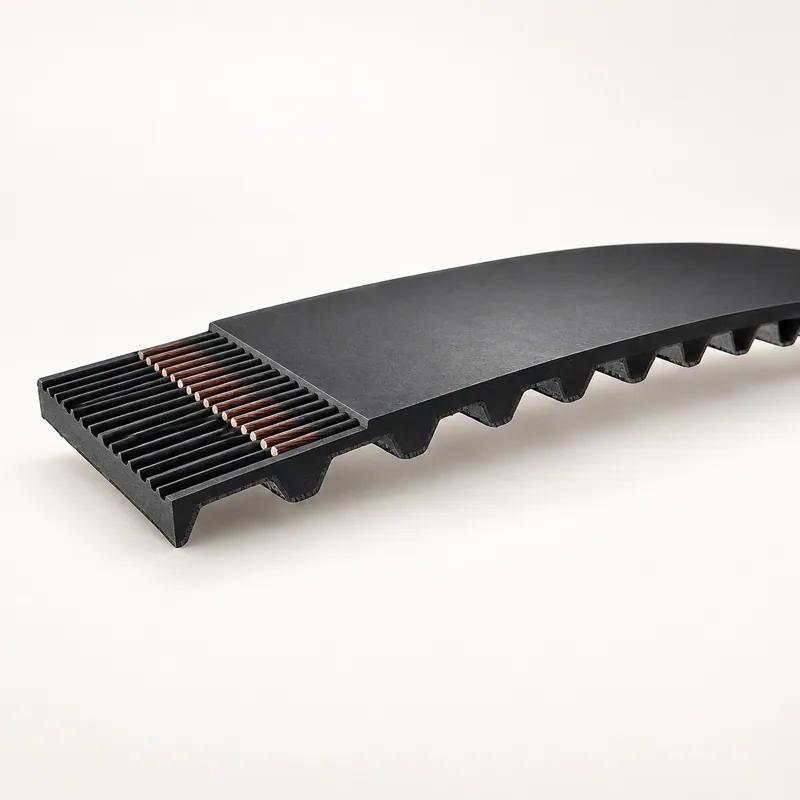

SKF PHG 1148-L-075 timing belt
- Brand
- SKF
- Category
- Power transmission
- Subcategory
- Timing belts
We respond promptly.
Since 1945 · Martínez, Buenos Aires, Argentina
Request your quote via WhatsApp or email, with the quantity you need.
Can't find the exact model? Write to us with the part number or model you're looking for: we'll find it and quote it, even if it's not listed in the catalog.
Description
SKF PHG 1148-L-075 is a reference of timing belt, within Power transmission. Request a quote for PHG 1148-L-075 via WhatsApp or email with the quantity you need; we respond promptly with the quote and equivalents.
SKF PHG series timing belts are power transmission components that combine the flexibility of a belt with the precision of a gear. They are used to synchronize shafts and transmit motion without slipping, which makes them ideal for applications where rotational accuracy is critical. MR Accesorios Industriales sells this line as part of its power transmission catalog.
The designation of these belts follows the format PHG …-L-…. The middle number indicates the number of teeth or the pitch length in tenths of an inch, depending on the series. For example, PHG 67-L-050 has 67 teeth and a 050 width. The final numeric suffixes indicate the belt width in hundredths of an inch: 050, 075 and 100 correspond to widths of 0.50, 0.75 and 1.00 inches respectively. Learn more about this coding to choose the right size.
These belts are used in a wide variety of industries in Argentina, such as food, textile, plastics and wood. They are common in machine tools, compressors, pumps and packaging equipment. Their ability to maintain synchronization makes them suitable for positioning systems, industrial printers and precision conveyors. They are also used in the automotive industry to drive camshafts and injection pumps, although in that case they are specified according to the application.
To select an SKF PHG timing belt, take into account the number of teeth on the pulleys, the center distance and the power to be transmitted. It is essential to verify the correct width according to the load: the wider the belt, the greater the transmission capacity. During installation, make sure the pulleys are aligned and the tension is correct; excessive tension accelerates wear on the teeth and bearings, while low tension causes tooth jumping. Lubricate only if the manufacturer indicates it; in general, these belts run dry.
SKF PHG timing belts are interchangeable with other brands that follow the same profile and pitch standard. When looking for a replacement, compare the pitch, width and number of teeth; a similar length alone is not enough. If you have doubts, check with the supplier or send a photo of the original belt. At MR Accesorios Industriales we can help you identify the correct equivalent for your equipment, without compromising performance.
To request a quote for your SKF PHG timing belt, send us the complete part number via WhatsApp. If you don't have it on hand, send us the measurements of the old belt or a photo and we will help you identify it. At MR Accesorios Industriales we can advise you so you find the belt your machine needs.
Dimensions
- Profile
- L
Frequently Asked Questions
- What does the numeric suffix on a PHG belt mean?
- The three-digit suffix indicates the belt width in hundredths of an inch. For example, 050 equals 0.50 inches, 075 equals 0.75 inches and 100 equals 1.00 inch. It is important to respect the original width so as not to affect the transmission.
- Can I replace a belt from another brand with an SKF PHG belt?
- Yes, as long as the profile, pitch, number of teeth and width match. Standardized timing belts are interchangeable between brands. Verify these parameters before installing to ensure correct operation.
- How do I know if the belt tension is correct?
- The correct tension allows the belt not to jump teeth under load, but without forcing the bearings. Use a tension gauge or follow the deflection method recommended by the machine manufacturer. Excessive tension shortens the service life of the components.