
Product page
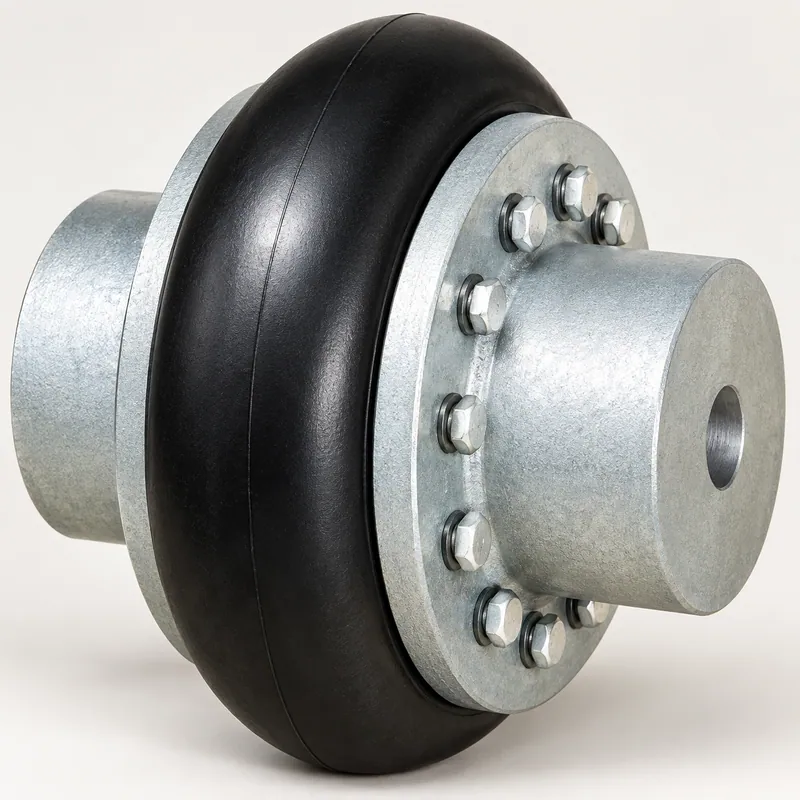
Coupling SKF PHE R30HTB
- Manufacturer Part Number
- PHE R30HTB
- Brand
- SKFOfficial brand
- Category
- Power transmission
- Subcategory
- Couplings

We respond promptly.
Request your quote via WhatsApp or email, with the quantity and time frame you need.
Can't find the exact model? Write to us with the part number or model you're looking for: we'll find it and quote it, even if it's not listed in the catalog.
Description
SKF PHE R30HTB is a coupling reference, within Power transmission. Request a quote for PHE R30HTB via WhatsApp or email with the quantity you need; we respond promptly with lead time and equivalents.
SKF couplings from the PHE R HTB line are high-performance flexible couplings designed to connect shafts and absorb misalignments, vibrations and shocks in power transmission systems. Their robust construction and split-sleeve design allow quick and safe assembly, ideal for demanding industrial applications. At MR Accesorios Industriales we supply this line backed by more than 80 years in the Argentine market.
The designation PHE R…HTB is interpreted as follows: PHE identifies the SKF coupling category; R indicates it is a flexible split-sleeve coupling; the number that follows (12, 16, 25, 30, 35, 40) corresponds to the coupling size and defines its torque capacity and maximum shaft diameter; HTB indicates that the sleeve is high-temperature and high-strength. For example, PHE R12HTB is the smallest size in the series, while PHE R40HTB has the highest capacity.
These couplings are used in a wide variety of industries in Argentina, such as food, cement, mining, petrochemical and general manufacturing. They are common in centrifugal pumps, fans, compressors, conveyor belts and mills, where power must be transmitted between shafts with a certain degree of misalignment and vibrations must be absorbed to protect the equipment.
To select the right coupling, take into account the nominal and maximum torque of the system, the shaft diameters, the rotation speed and the environmental conditions. Assembly must ensure precise initial alignment, even though the coupling tolerates misalignments. Lubrication is not required in these elastomeric-sleeve couplings, but the condition of the flexible element and the tightening of the screws must be checked. Follow the manufacturer's instructions for correct assembly.
Regarding equivalences and interchangeability, SKF PHE R HTB couplings can replace other flexible split-sleeve couplings from brands such as Fenner, Lovejoy or Dodge, as long as the critical dimensions and torque capacity are respected. It is essential to verify the shaft diameter, hub length and sleeve type. We do not invent part numbers: consult us with the exact part number and we will advise you.
To request a quote for your SKF PHE R HTB coupling, send us the complete part number via WhatsApp to MR Accesorios Industriales. We will reply with the technical advice you need. With more than 80 years of experience, we are your reliable partner in power transmission.
This description provides guidance on the product type. Check the configuration and dimensions of this reference.
Dimensions
Dimensions and tolerances: Send us the part number via WhatsApp and we'll confirm dimensions, sealing, and internal clearance against the manufacturer's data sheet.
Frequently Asked Questions
- What does HTB mean in SKF PHE R couplings?
- HTB indicates that the sleeve is high-temperature and high-strength. This allows the coupling to work in applications with high temperatures or severe conditions, maintaining its flexibility and damping capacity.
- Do PHE R HTB couplings require lubrication?
- No, these couplings use an elastomeric element that does not require lubrication. Only the sleeve wear and the tightening of the screws must be checked periodically to ensure optimal operation.
- How do I choose the correct size of PHE R HTB coupling?
- You must consider the nominal and maximum torque, the shaft diameters and the rotation speed. Choose the size that supports those values with a safety margin. If you have doubts, consult us with the data of your application.