
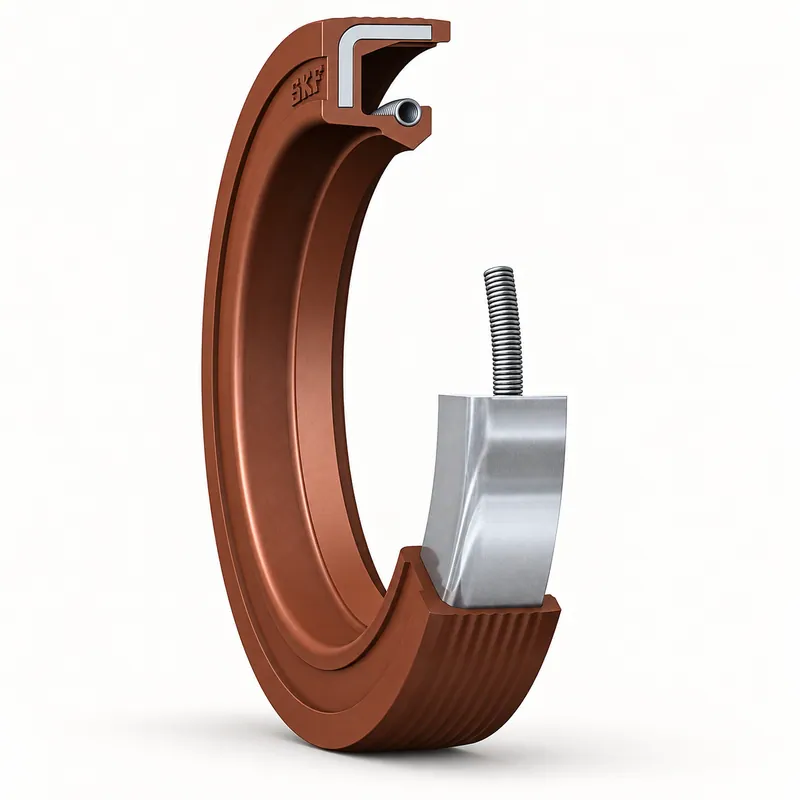

SKF 125X146X14 CRSA1 P radial shaft seal
- Brand
- SKF
- Category
- Seals
- Subcategory
- Radial shaft seals
We respond promptly.
Since 1945 · Martínez, Buenos Aires, Argentina
Request your quote via WhatsApp or email, with the quantity you need.
Can't find the exact model? Write to us with the part number or model you're looking for: we'll find it and quote it, even if it's not listed in the catalog.
Description
SKF 125X146X14 CRSA1 P is a reference of radial shaft seal, within Seals. Request a quote for 125X146X14 CRSA1 P via WhatsApp or email with the quantity you need; we respond promptly with the quote and equivalents.
The SKF CRSA P series radial shaft seal is a lip seal designed for rotating shafts. Its function is to retain lubricant inside the assembly and block the ingress of dust, water or particles, protecting bearings and bushings. It is press-fitted into the housing and runs on the shaft with a flexible lip that compensates for minor misalignment. It is a key component in industrial maintenance because it extends component service life and reduces unplanned downtime.
The designation of these seals combines dimensions and suffixes. In the example 125X146X14 CRSA1 P, the numbers indicate shaft diameter, outer diameter and width, in millimeters. The letters CRSA identify the construction family, while the final number and the letter P indicate lip and material variants. To choose the correct seal, always compare the three dimensions and the complete part number; a difference in the suffix can change the elastomer type or the spring.
They are used in pumps, electric motors, gearboxes, conveyor belts, agricultural machinery and process equipment. In food, chemical and petrochemical plants, sealing prevents leaks and cross-contamination. They are also common in maintenance workshops that replace seals in gearboxes and rollers. The CRSA P series covers applications with moderate peripheral speeds and medium sealing requirements, typical of Argentine industry.
To select, verify the shaft diameter, the housing and the available width. The lip must remain lubricated; if the seal runs dry, it wears quickly. Alignment between shaft and housing is critical: an eccentricity greater than permissible causes leakage. During installation, use a tool that presses on the outer edge and avoid striking the lip. If the shaft is worn, consider a seal with an auxiliary lip or a repair sleeve.
Radial shaft seals are interchangeable between manufacturers if dimensions and lip type match. Diameter alone is not enough: the width and lip shape must be compatible. Brands such as SKF, NSK, Timken or NTN offer equivalents, but always verify the complete part number. At MR Accesorios Industriales we sell SKF and can guide you if you send us the dimensions or the part number stamped on the old part.
Before requesting a quote, check the condition of the shaft and housing. A new seal does not seal well on a scratched or loose shaft. Send us the complete part number via WhatsApp, along with the dimensions if you have them, and we will reply with the correct reference. We advise workshops and plants throughout Argentina.
Dimensions
Dimensions and tolerances: Send us the part number via WhatsApp and we'll confirm the dimensions and version against the manufacturer's data sheet.
Frequently Asked Questions
- How do I know which radial shaft seal I need?
- Measure the shaft diameter, the housing outer diameter and the width. These three data define the size. Then identify the lip type and material according to the fluid and temperature. If you have the old part number, send it complete: it is the safest way to get it right.
- Are SKF seals interchangeable with other brands?
- Yes, if dimensions and lip design match. Interchangeability does not depend only on diameter: width, lip shape and material must be equivalent. Consult us with the original part number and we will indicate the compatible option.
- What should I consider when installing a radial shaft seal?
- Lubricate the lip before installation, align shaft and housing, and use a tool that presses on the outer edge without striking the lip. Verify that the shaft has no burrs or wear. Poor alignment or a damaged shaft cause leaks even if the seal is new.