
Blog
Tsubaki in mining: what is used in crushers, mills, screens and conveyor belts, and how to order it
Which Tsubaki products are used in mining equipment and how to identify them to order them correctly.
TSUBAKI catalog by part number
Technical team at MR Accesorios Industriales · Updated on November 2, 2026
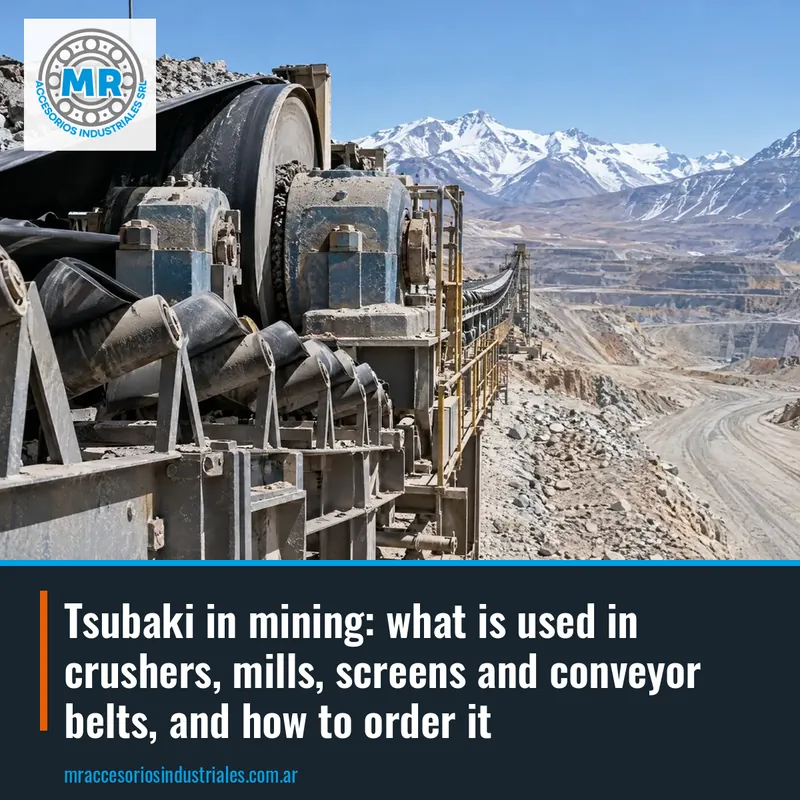
Tsubaki roller chains in mining equipment
Tsubaki roller chains are essential components in the power transmission of many mining equipment. In crushers and mills, they transmit motion from the motors to the main shafts, withstanding high loads and demanding working conditions. They are also found in feeders and other auxiliary mechanisms where reliable transmission is required. They work in environments with dust, vibrations and load variations typical of the mining industry.
To identify a Tsubaki roller chain, it is important to check the marks stamped on the links or on the original packaging. Codes such as RS40 and RS60 correspond to standard short-pitch chains, widely used in power transmissions. In heavier applications, such as mill or crusher drives, long-pitch or reinforced series chains may be required. It is always advisable to measure the pitch, the inner width and the roller diameter to confirm the specification.
When ordering a roller chain for mining, send the exact code if you have it, along with the number of links or the total length. If you do not have the code, a photo of the chain and the main measurements help identify the model. Avoid ordering only by brand or by machine type, since the same equipment may use several different chains. At MR we quote the Tsubaki chain you need for your mining operation.
Tsubaki freewheels for conveyor systems
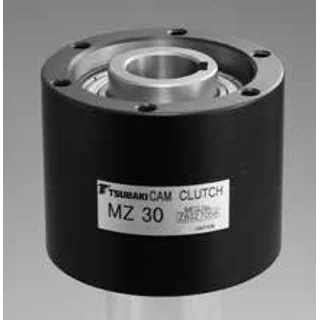
Tsubaki freewheels are devices that allow rotation in one direction only and are used in mining conveyor systems, such as conveyor belts and elevators. On belts, they prevent load backrunning when the motor stops, protecting the system and improving safety. They are also used in applications requiring intermittent motion or one-way coupling.
Tsubaki freewheel models are identified by codes such as MZ15, MZ30 and MZ70. These codes are usually stamped on the body of the part or on the factory label. It is important to verify the shaft and housing diameter to ensure correct selection. In mining, larger freewheels are used on high-capacity belts or in systems with heavy loads.
To get a quote for a Tsubaki freewheel, you need the model code and, if possible, the shaft and housing dimensions. It is also useful to know the required direction of rotation and the approximate torque of the application. Avoid confusing freewheels with other transmission components, such as clutches or brakes. At MR we distribute Tsubaki freewheels and help you choose the right one for your mining equipment.
Tsubaki conveyor chains for material handling
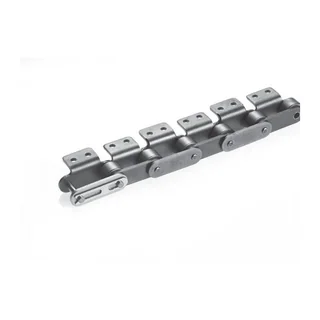
Tsubaki conveyor chains are designed for moving bulk materials in the mining industry. They are used in conveyor belts, plate feeders and other mineral handling equipment. They are used for transporting rocks, gravel and other materials, where there are heavy loads and abrasion.
Codes such as M 20, M 40 and M 56 identify different Tsubaki conveyor chains. These codes are usually stamped on the links or in the technical documentation. For correct selection, it is necessary to know the chain pitch, the link width and the working load. In mining applications, it is common to use chains with special attachments, such as scrapers or buckets, which are mounted on the base chain.
When ordering a Tsubaki conveyor chain, specify the model code and the total length required. If the chain has attachments, indicate the type and the spacing between them. It is also useful to send a photo of the used chain to check wear and confirm the specification. Avoid ordering only by chain width, since there are multiple variants. At MR we quote Tsubaki conveyor chains for your mining operation.
Tsubaki leaf chains for lifting applications
Tsubaki leaf chains, also known as steel link chains, are used in lifting and traction applications in mining. They are common in forklifts, cranes and counterweight systems, where high tensile strength and quiet operation are required. Unlike roller chains, leaf chains have no rollers, which makes them more compact and suitable for static loads or slow movements.
Tsubaki leaf chain models are identified by codes such as BL 466, BL 646 and BL 844. For correct selection, it is advisable to verify the pitch, the number of plates per link and the pin diameter. In mining, they are used in lifting and counterweight equipment.
To get a quote for a Tsubaki leaf chain, you need the model code and the total length or the number of links. It is also useful to know the working load and the operating conditions. Avoid confusing leaf chains with roller chains, since they have different applications. At MR we sell Tsubaki leaf chains and advise you on selection for your mining equipment.
Tsubaki couplings for connecting shafts in mining equipment
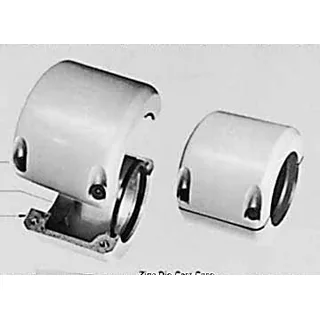
Tsubaki couplings are used to connect transmission shafts in mining equipment, such as pumps, compressors and generators. They transmit torque between two shafts that may be slightly misaligned, absorbing vibrations and shocks. To choose them, you need to look at the coupling type, the size and the shafts to be joined.
Tsubaki couplings are identified by codes such as CR3812, CR5014 and CR5016. These codes are usually stamped on the part or on the factory label. To select a coupling, it is necessary to know the shaft diameters, the power to be transmitted and the rotation speed. In mining applications, the service factor must also be considered due to variable loads and frequent starts.
When ordering a Tsubaki coupling, specify the model code and the diameters of the shafts to be connected. If you do not have the code, send the shaft measurements and the motor power. It is also useful to know whether the coupling should include a chain or whether it is purchased separately. Avoid ordering only by shaft diameter, since there are several series. At MR we quote Tsubaki couplings for your mining equipment.
Tsubaki torque limiters to protect equipment
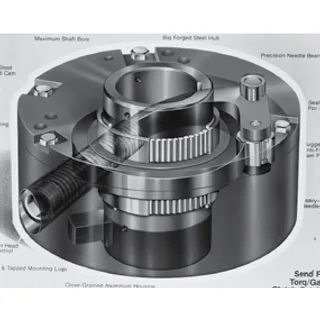
Tsubaki torque limiters are safety devices that protect mining equipment against overloads and jams. They are installed in the transmission and disconnect automatically when the torque exceeds a preset value, preventing damage to motors, gearboxes and other components. In mining, they are used in crushers, mills and conveyor belts, where jams can cause costly stoppages. Their operation is based on a friction or ball mechanism that disengages when the limit is exceeded.
Tsubaki torque limiters are selected according to the required disengagement torque and the shaft diameter. They are identified by the torque range and the mounting type, and it is advisable to confirm both before ordering.
To get a quote for a Tsubaki torque limiter, you need to know the operating torque and the shaft diameter. It is also useful to know the rotation speed and the required coupling type. Avoid selecting a limiter only by shaft size, since torque is the critical parameter. At MR we distribute Tsubaki torque limiters and help you protect your mining equipment.
How to order Tsubaki products for mining
To order Tsubaki products for mining, it is essential to have as much information as possible about the part. If you have the exact code, such as RS60 or MZ30, send it along with the required quantity. If you do not have the code, a photo of the part with a ruler or tape measure next to it helps identify the dimensions. It is also useful to indicate the equipment where the part is mounted and the original equipment brand, if known.
When requesting a quote, specify the product type (chain, freewheel, coupling, etc.) and the operating conditions, such as load, speed and environment. Avoid ordering only by the Tsubaki brand without further details, since each product type has several models. At MR we can help you identify the correct part from a sample or from the measurements.
For a quick quote, send us a message by WhatsApp or email with the code, the measurements or a photo of the part. We will reply as soon as possible. At MR we sell Tsubaki products for the mining industry and quote any transmission component you need for your equipment.
Frequently asked questions
Which Tsubaki chains are used in crushers?
Crushers usually use short-pitch roller chains, such as the RS series, to transmit power from the motor. Conveyor chains may also be used to feed the material. The exact model depends on the equipment design.
How do I identify a Tsubaki freewheel?
Tsubaki freewheels have a code stamped on the body, such as MZ15, MZ30 or MZ70. If it is not visible, measure the shaft and housing diameter, and consult a specialist.
Which Tsubaki coupling is suitable for a mining conveyor belt?
The selection depends on torque, speed and shaft diameters. Send us the code or the measurements and we will quote it.
Does Tsubaki manufacture chains for bucket elevators?
Yes, Tsubaki offers conveyor and leaf chains suitable for bucket elevators. They are chosen according to pitch, load and bucket type.
How do I order a Tsubaki spare part if I do not have the code?
You can send a photo of the part with a reference measurement, such as a ruler, and describe the equipment where it goes. At MR we help you identify the correct model.
Products with photos in the catalogue
Keep reading
- Tsubaki industrial chains: quality, durability and performance for demanding applications
Discover the types of Tsubaki chains we supply: roller, conveyor, leaf, freewheels, couplings and torque limiters. We help you choose the right one for your application.
- How to Read Tsubaki Codes: Designation Structure, Prefixes, Suffixes, and Real Examples
Practical guide to interpreting the nomenclature of Tsubaki chains, freewheels, couplings, and other products. With real examples and tips for requesting quotes.
- Tsubaki by industry: where it is used, how to select it, assembly and maintenance to make it last
We review the most common Tsubaki applications in Argentine industry, selection criteria according to component type, and good assembly and maintenance practices to extend service life.
Continue here
Need a TSUBAKI quote?
Send us the TSUBAKI part number, the size or a photo of the part and we will get back to you with a quote.