
Blog
How to choose roller chains for harvesters and norias
Donghua roller chains are key components in agricultural machinery. We explain how to identify them, what data to provide for a quote and what mistakes to avoid when mounting them.
DONGHUA catalog by part number
Technical team at MR Accesorios Industriales · Updated on November 9, 2026
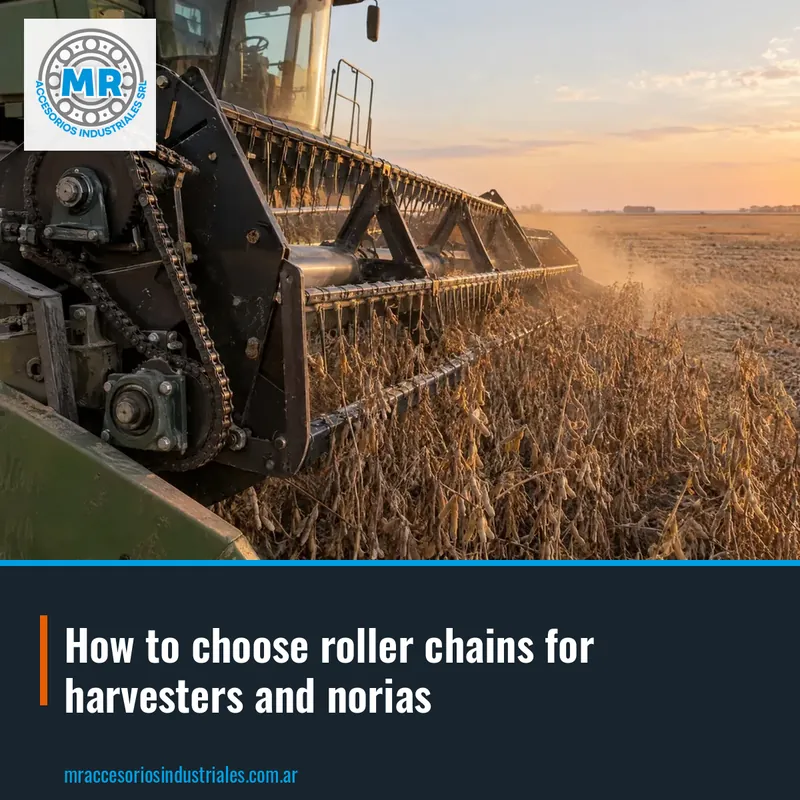
What Donghua roller chains are and why they are used in agriculture
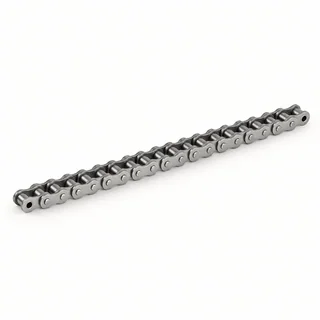
Donghua roller chains are power transmission elements used in a wide variety of agricultural equipment. They consist of articulated metal links that mesh with sprockets, allowing movement and force to be transmitted between shafts. In agriculture, they stand out for their wear resistance and their ability to work in demanding conditions such as dust, humidity and variable loads. Their standardized design makes replacement and compatibility with other components easy.
In harvesters, seeders, norias and storage plants, Donghua chains perform critical functions. For example, they drive feed systems, grain elevators and seeding mechanisms. Choosing the correct pitch and the right chain type directly affects the efficiency and service life of the equipment. That is why it is essential to know the specifications before placing an order.
When requesting a quote for a Donghua chain for agriculture, it is advisable to have the chain code on hand, such as ASA 60, ASA 80 or ASA 50, and the main measurements. It is also useful to indicate the machine and the specific application, as this allows us to confirm that the selected chain is the correct one. At MR we sell these chains and can advise you so that you choose the most suitable option for your equipment.
ASA chains for harvesters: critical points and replacement
Harvesters use roller chains in several systems, such as the header, the feed auger and the grain elevators. ASA 60 and ASA 80 chains are common in these machines, as they offer a good balance between strength and size. It is important to periodically check the condition of the links, pins and rollers, because wear can cause failures during harvest.
To identify the correct chain, you can read the code stamped on the links or measure the pitch, which is the distance between the centers of two consecutive pins. For example, an ASA 60 chain has a pitch of 3/4 inch, while an ASA 80 has a pitch of 1 inch. If you are not sure, you can send us a photo of the old chain or the measurements, and we will help you identify it.
A common mistake when replacing chains in harvesters is using an incorrect pitch or inadequate quality. ASA roller chains follow a dimensional standard, which allows them to be interchanged with others of the same pitch. When requesting a quote, indicate the code, the number of links and the type of machine. That way we can quote the exact chain for your equipment.
Chains for seeders: precision and durability
In seeders, roller chains transmit movement from the drive wheel to the seed and fertilizer meters. The precision of this transmission is key to achieving uniform seeding. ASA 50 and ASA 60 chains are common in these machines, although the exact model depends on the manufacturer and the seeding system.
As in other agricultural machines, chain wear can alter seeding density. That is why it is recommended to check tension and lubricate the chains according to the manufacturer's maintenance plan. If the chain stretches beyond the allowed limit or shows signs of fatigue, it is time to replace it. A new chain restores the original precision of the system.
To request a quote for a seeder chain, we need to know the code, such as ASA 50, or the pitch and inner width measurements. It is also useful to know the brand and model of the seeder, because some machines use special chains with attachments. At MR we distribute Donghua chains and can quote the exact reference for your seeder.
Chains for norias and grain elevators
Norias and grain elevators use roller chains to move the buckets that transport the grain. These chains work under high load and speed conditions, so they must be robust and resistant to fatigue. ASA 80 and larger-pitch chains are common in these applications, although special chains with extended pins are also used.
In storage plants, the failure of a noria chain can stop the entire loading or unloading operation. That is why it is essential to select a quality chain and perform preventive maintenance. Proper lubrication and elongation control are recommended practices to extend the service life of the chain and avoid unexpected downtime.
When requesting a quote for a noria chain, it is important to indicate the pitch, the chain type and the number of links. If the chain has attachments for buckets, their position and spacing must also be specified. With that data, at MR we can quote the right Donghua chain for your grain elevator.
How to identify a Donghua chain and what data to provide for a quote
Donghua chains usually have the code stamped on the outer links. For example, you may find markings such as ASA 60, ASA 80 or ASA 50. If the code is not legible, you can measure the chain pitch, which is the distance between the centers of two consecutive pins, and the inner width between plates. These two measurements allow you to identify the corresponding ASA series.
In addition to the code and measurements, it is useful to provide the number of links needed and the type of machine where it will be installed. If the chain has accessories, such as extended pins or special plates, it is advisable to mention it or send a photo. With that information, we can confirm the exact reference and quote the correct Donghua chain for you.
A frequent mistake is ordering a chain only by the machine name, without verifying the pitch. Although many harvesters use ASA 60 chains, there are variations depending on the model and year. That is why we always recommend checking the stamped code or measuring the old chain. That way you ensure an exact replacement.
Common mistakes when mounting and maintaining agricultural chains
One of the most common mistakes is over-tightening the chain, which generates additional loads on the bearings and accelerates wear. Conversely, a chain that is too loose can jump the sprocket teeth and cause damage. Correct tension is checked according to the equipment manufacturer's instructions, and usually allows slight lateral movement in the slack span.
Inadequate lubrication is another frequent cause of premature failures. Agricultural chains work in environments with dust and debris, which requires specific lubricants that penetrate the links without attracting dirt. It is important to clean the chain before lubricating and apply the lubricant inside the links, where wear occurs.
When installing a new chain, the alignment of the sprockets and the condition of the teeth must be checked. If the sprockets are worn, the new chain will be damaged quickly. At MR we sell Donghua chains and can also advise you on proper maintenance to extend their service life in your agricultural equipment.
Donghua chains for your agricultural machinery: how to request a quote
In agriculture, where downtime due to failures is very costly, having a well-chosen chain is a priority. In addition, its standardization allows them to be replaced without modifying other components of the transmission system.
At MR we sell Donghua chains for agricultural machinery, from harvesters and seeders to norias and storage plants. We quote codes such as ASA 50, ASA 60 and ASA 80, and also special references if your equipment requires them. We only need you to send us the code or the measurements of the chain you are looking for.
If you have doubts about which Donghua chain corresponds to your machine, write to us via WhatsApp or email. Tell us the application, the code or the measurements, and we will quote the right option. You can also send us a photo of the old chain so that we can identify the exact reference. That way we quote the correct replacement.
Frequently asked questions
What Donghua chain does a harvester use?
It depends on the model and the system. Many harvesters use ASA 60 or ASA 80 chains in the header and elevators. To confirm, check the code stamped on the old chain or measure the pitch. If you send us that data, we will quote the correct chain.
How do I know if my chain is ASA 50, ASA 60 or ASA 80?
You can read the code stamped on the links or measure the pitch: ASA 50 has a pitch of 5/8 inch, ASA 60 of 3/4 inch and ASA 80 of 1 inch. If you are not sure, send us a photo and we will help you identify it.
Are Donghua chains compatible with other brands?
Yes, roller chains follow international standards, so a Donghua ASA 60 chain is interchangeable with another brand of the same pitch. You only need to verify the code and measurements.
What data do I need to request a quote for a Donghua chain?
With the code (for example, ASA 60), the number of links and the application, that is enough. If the chain has attachments, indicate their position or send a photo. With that we will quote you right away.
How do I order a Donghua chain for a noria?
Send us the pitch, the chain type and the number of links. If it has pins for buckets, specify the distance between them. A photo of the used chain also helps. We will quote the exact reference.
Products with photos in the catalogue
Keep reading
- Donghua in Argentina: product guide, uses and how to quote by code
Learn about Donghua roller chains, their applications in Argentine industry and how to request a quote by code or size.
- How to Read Donghua Codes: A Practical Guide to Roller Chain Designation
Understanding Donghua chain nomenclature allows you to identify pitch, series, and construction features. We explain the code structure with real examples.
- Donghua Chains: Applications, Selection and Maintenance for Industry
Donghua roller chains are used in power transmission and conveying across multiple industries. Learn how to select the right series and what maintenance to apply so they last longer.
Continue here
Need a DONGHUA quote?
Send us the DONGHUA part number, the size or a photo of the part and we will get back to you with a quote.