
Blog
DBH Seal Installation and Removal: Step-by-Step Guide to Extend Service Life
Correct installation and removal of DBH seals prevents premature failures and lubricant leaks. We explain the steps, tools, and mistakes to avoid.
Technical team at MR Accesorios Industriales · Updated on October 25, 2026
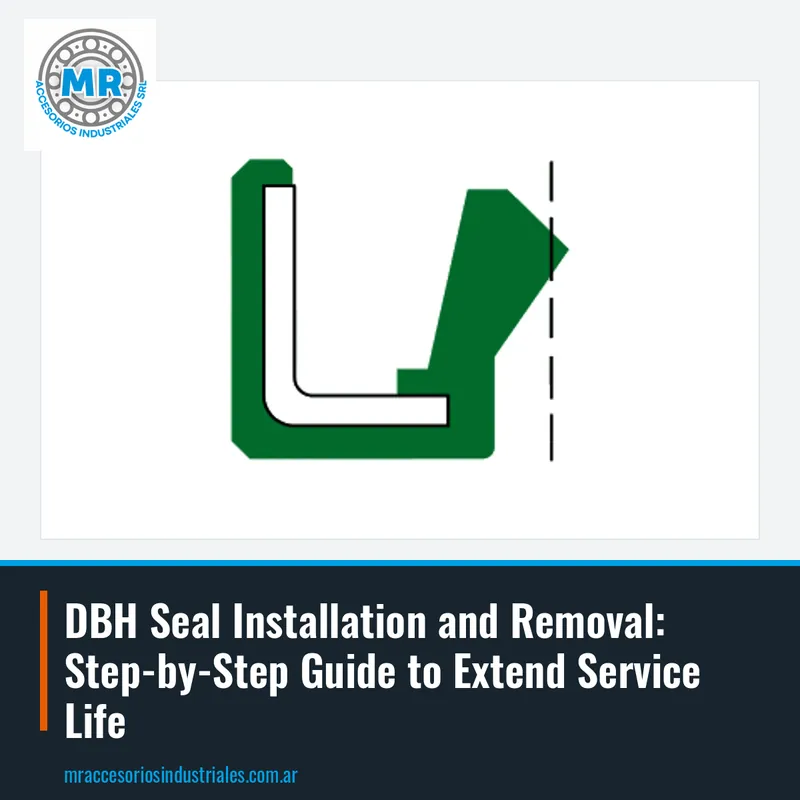
Why proper installation defines the service life of the DBH seal
Installation is the most critical stage in the life of a radial seal. A poorly installed DBH seal can fail within hours, even if the part is correct. Most premature seal failures are due to installation errors, not manufacturing defects. Therefore, dedicating time to prepare the installation is the best investment to avoid plant downtime.
A radial seal works by sealing the space between a rotating shaft and a fixed housing. Its sealing lip must maintain constant contact with the shaft, withstanding pressure, temperature, and speed. If the lip is damaged during installation, it loses its sealing capacity and allows lubricant leaks or contaminant ingress. In industrial equipment, this translates into accelerated bearing wear and costly repairs.
DBH seals are used in gearboxes, motors, pumps, compressors, and a wide variety of machinery. Each application has its particularities, but the installation principles are universal. Knowing them allows you to work with confidence and get the maximum performance from each seal. In this guide, we show you how to do it correctly.
Tools needed to install and remove DBH seals
Having the right tools is the first step to a successful installation. You don't need sophisticated equipment, but you do need elements that prevent damaging the seal. A rubber or nylon hammer, a tube or bushing of the appropriate diameter, and a caliper for measuring are essential. It's also advisable to have clean rags and solvent on hand to clean the surfaces.
To remove a used seal, ideally use a seal puller. This tool allows you to remove the part without damaging the housing or shaft. If you don't have a puller, you can use a flathead screwdriver, but with great care not to scratch the surfaces. Any mark or burr in the housing can cause leaks in the new seal.
In addition to tools, it's essential to work in a clean environment. Dirt is the worst enemy of a seal: a single particle can damage the sealing lip. Before starting, clean the shaft and housing thoroughly with a clean rag and solvent. Verify that there are no burrs, rust, or remnants of the old seal.
Preparation of the shaft and housing before installation
Surface preparation is as important as the installation itself. The shaft must be free of scratches, corrosion, and excessive wear. If the shaft has deep marks, the new seal cannot seal correctly. In such cases, the shaft should be repaired with repair sleeves or replaced.
The housing where the seal sits must also be clean and undamaged. Any burr or dent can prevent the seal from seating correctly. Use fine sandpaper to remove minor imperfections and clean with solvent. Verify that the housing diameter is within the tolerances recommended by the manufacturer.
Before mounting, apply a thin layer of compatible lubricant on the seal lip. This reduces initial friction and helps the lip seat correctly. Never mount a seal dry, as the lip can be damaged in the first rotations. The lubricant should be the same as the one the seal will contain or one compatible with the elastomer.
Step by step: how to correctly install a DBH seal
Installing a radial seal requires patience and precision. First, verify that you have the correct seal: compare the dimensions and design with the original. Seals are identified by their three dimensions: inner diameter, outer diameter, and width. For example, for seal 5999, it's advisable to confirm those measurements before installing.
Place the seal at the housing opening, ensuring it is perfectly perpendicular to the shaft. Never hit it directly with a metal hammer. Use a tube or bushing that rests on the outer face of the seal, distributed evenly. Tap gently with a rubber hammer, alternating sides so it enters evenly.
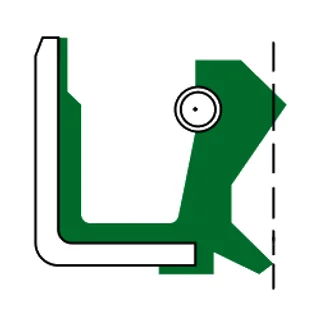
If the seal has a spring on the lip, verify that it hasn't come out during installation. The spring must remain in its original position, ensuring lip pressure on the shaft. Once mounted, rotate the shaft manually to check for abnormal rubbing. If all is well, the seal is ready to work.
Common mistakes that shorten seal service life
One of the most frequent mistakes is mounting the seal crooked. If the seal does not enter perpendicular to the shaft, the lip deforms and loses its sealing capacity. Another classic mistake is using a metal hammer directly on the seal, which damages the casing and lip. Always use an intermediate element that distributes the force.
Not cleaning surfaces properly is another serious mistake. Dirt trapped between the seal and housing can cause leaks. You should also never reuse a seal that has been removed, even if it appears to be in good condition. The lip has already suffered deformation and will not seal correctly.
Choosing a seal with the wrong material for the fluid or working temperature also shortens its life. Consult us to ensure you select the appropriate elastomer for your application.
How to remove a DBH seal without damaging the housing
Removing a used seal requires as much care as installation. If you are going to replace the seal, it doesn't matter if you damage the old part, but you must protect the housing and shaft. Use a seal puller if you have access to one. Place the puller jaws under the seal edge and apply force evenly.
If you don't have a puller, you can use a flathead screwdriver as a lever. Rest the screwdriver on the outer edge of the seal and pry gently. Never pry on the shaft, as you can scratch it. Work in sections, moving the seal little by little until it comes out.
Once removed, inspect the housing and shaft for damage. If you find scratches or burrs, correct them before installing the new seal. Clean the area well and verify that no remnants of the old seal remain. A clean, undamaged housing is key to the success of the new installation.
When to consult a seal specialist
If you have doubts about which DBH seal to use for your application, it's best to consult a specialist. At MR we sell DBH seals, and we can help you identify the correct part. Send us a photo of the old seal, the measurements, or the engraved code, and we'll quote the replacement.
It's also advisable to consult if the seal failed prematurely. A failure analysis can reveal installation problems, contamination, or incorrect material selection. We can guide you to correct the cause and prevent recurrence.
Don't ignore a lubricant leak: it can damage bearings and other costly components. Replace the seal in time and ensure correct installation. If you need help, contact us via WhatsApp or email with your equipment details and we'll advise you promptly.
Frequently asked questions
How do I know if a DBH seal is properly installed?
A properly installed seal is perpendicular to the shaft, with no visible deformation. The lip should seat evenly on the shaft and the spring should be in position. When rotating the shaft manually, there should be no abnormal rubbing or lubricant leaks.
Can I reuse a DBH seal after removing it?
It is not recommended to reuse a seal that has been removed. The lip suffers deformation and loses its sealing capacity, even if it doesn't look damaged. Always install a new seal when replacing.
What should I do if the shaft has scratches where the seal sits?
If the shaft has deep scratches, the new seal cannot seal correctly. It can be repaired using a repair sleeve that covers the damaged area. Consult a specialist to choose the appropriate solution.
How do I identify the DBH seal I need?
A seal is identified by its inner diameter, outer diameter, and width. With these data or the old seal code, you can quote the replacement. Send us a photo or measurements via WhatsApp and we'll help you.
What lubricant should I use to install a DBH seal?
Use a lubricant compatible with the seal elastomer and the fluid to be sealed. Ideally, use the same lubricant as the system. Avoid greases with additives that could degrade the lip material.
Products with photos in the catalogue
Keep reading
- DBH seals in Argentina: complete product guide and how to quote them
Discover the DBH radial seal line we distribute in Argentina, their typical applications and how to request a quote with the exact code.
- DBH Codes: Guide to Reading Radial Seal Designations
Understanding DBH seal nomenclature helps you order the correct part. We explain the code structure, what prefixes and suffixes indicate, and how to use real examples for your inquiry.
- DBH Oil Seals: Applications, Selection, Installation and Maintenance for Long Life
DBH radial oil seals are critical components in industrial equipment. In this guide, we cover where they are used, how to choose the right model, and what installation and maintenance care extends their service life.
Continue here
Need a DBH quote?
Send us the DBH part number, the size or a photo of the part and we will get back to you with a quote.