
Blog
Common failures in Dodge products: how to recognize them in time and prevent them
We review the most common failures in Dodge insert bearings, housings, pulleys, reducers, and tapered bushings, and how correct assembly and maintenance help avoid them.
DODGE bearings in Argentina: guide and quotes
Technical team at MR Accesorios Industriales · Updated on October 14, 2026
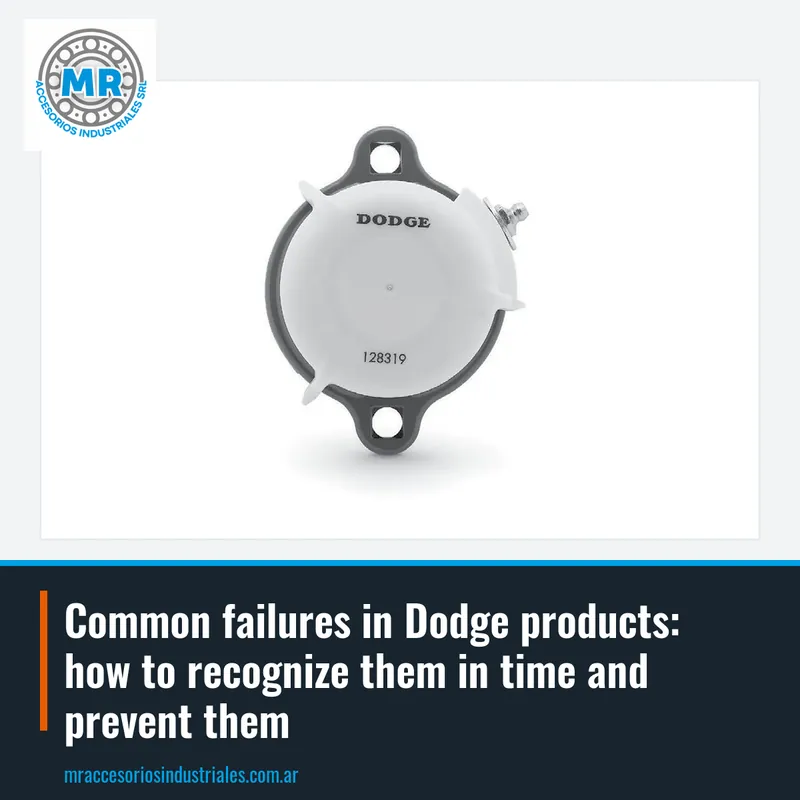
Typical failures in Dodge insert bearings
Dodge insert bearings, such as codes INS-ER-DL-30M or INS-ER-SC-100, are used in agricultural and industrial applications where contamination and misalignment are frequent. A common failure is premature wear due to dust or water ingress when the seal does not seat properly in the housing. Pitting on the raceways is also seen due to insufficient lubrication or use of inadequate grease. Recognizing metallic noise or increasing vibration in time prevents major damage to the shaft.
Another common failure is loosening of the set screw that fixes the inner ring to the shaft. If the bearing rotates on the shaft, wear occurs in the bore and loss of fit. To prevent this, check the torque of the set screws according to the manual and use thread locker when appropriate. In applications with alternating loads, it is advisable to check the fit at each scheduled stop.
To get a quote for a Dodge insert bearing, send the complete code such as INS-ER-DL-115 and the shaft dimensions. If the part has no legible code, a photo of the bearing and housing helps identify it. Avoid ordering only by bore size, because there are seal and fixing variants that change performance.
Problems in Y-housings with insert bearing
Dodge Y-housings with insert bearing, such as codes 130362 or 124602, are ready-to-mount units that simplify installation. However, a frequent failure is housing breakage due to impact loads or excessive tightening of the fixing bolts. Corrosion is also seen in humid environments if the housing does not have the appropriate surface treatment.
Misalignment between two housings sharing a shaft is another cause of failure: it generates unforeseen axial loads and overheats the bearing. To prevent this, align the housings with a laser or precision straightedge before final fixing. Also, verify that the insert bearing is correctly seated in the spherical housing seat, so it can compensate for small deviations.
When ordering a Dodge Y-housing, indicate the complete code such as 124643 and the center distance between the fixing bolts. If the housing is damaged, also check the condition of the insert bearing, because they are often replaced together. Send us a photo of the assembly and we will quote it promptly.
Failures in Dodge pulleys and tapered bushings
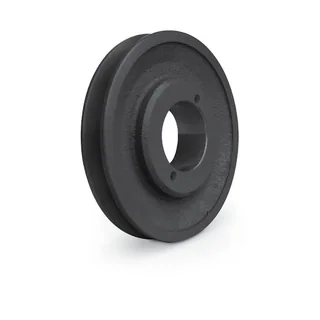
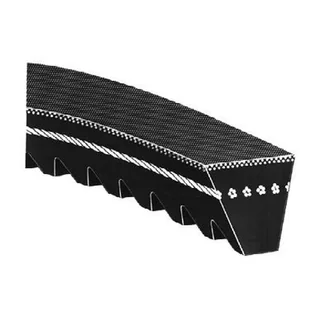
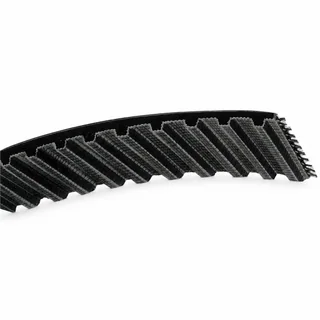
Dodge pulleys, such as models MA98 or MA24, can show wear in the grooves due to improperly tensioned or misaligned belts. A belt that is too tight overloads the shaft bearings, while a loose belt slips and generates heat. Uneven wear on the groove walls indicates misalignment between pulleys.
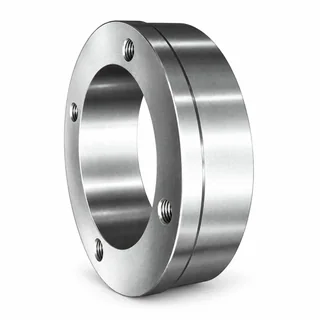
Dodge tapered bushings and components are critical for fixing pulleys and sprockets to the shaft. A common failure is bushing loosening due to not respecting the tightening torque of the screws. If the bushing loosens, the pulley can move axially and damage the keyway or shaft. To prevent this, tighten the screws in a cross pattern and in progressive steps up to the specified torque.
To get a quote for a Dodge pulley, send the code MA60 and the type of bushing it uses, or the shaft and belt dimensions. If the pulley is worn, also check the condition of the tapered bushing, because they are usually replaced together. A photo of the mounted assembly helps us identify the exact model.
Dodge reducers: signs of failure and preventive maintenance
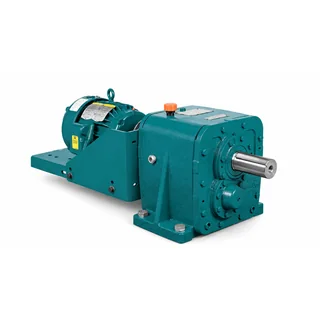
Dodge reducers, such as models Maxum XTR 70 or Maxum XTR 60, are robust equipment, but they can fail due to lack of lubrication or overload. Abnormal noise, increased temperature, or oil leakage from seals are early signs of problems. If metal chips are found in the oil, there is internal wear in gears or bearings.
The level and quality of the lubricant are key: use the grade and viscosity recommended by the manufacturer and respect the change intervals. In applications with frequent starts or shock loads, it is advisable to shorten maintenance intervals. Also, check the alignment between the reducer and the driven equipment to avoid excessive radial loads on the output shaft.
To get a quote for a Dodge reducer, indicate the complete code such as Maxum XTR 80 and the reduction ratio if you know it. If the reducer is damaged, describe the failure and attach photos of the nameplate. With that, we will quote the exact replacement promptly.
Assembly errors that cause premature failures
Many failures in Dodge components originate from incorrect assembly. For example, hitting the outer ring of an insert bearing to install it damages the raceways and seals. Use assembly tools that apply force only on the ring that is being fitted. For tapered bushings, clean the contact surfaces well before tightening and follow the manufacturer's assembly instructions.
Cleanliness is essential: any particle that enters the bearing or reducer during assembly acts as an abrasive. Work in a clean environment and protect the parts until final closure. In Y-housings, do not force the insert bearing if it does not enter aligned: it can damage the spherical seat and lose self-aligning capability.
Another common error is not checking the internal clearance of the bearing after assembly. Excessive tightness generates heat and premature failure, while loose fit causes vibration. Follow the manufacturer's recommendations for each type of application and, if in doubt, consult us before starting the equipment.
Predictive maintenance for Dodge components
Predictive maintenance helps detect incipient failures before they cause unplanned downtime. In insert bearings and Y-housings, measuring vibration with a portable analyzer allows identifying raceway wear or imbalance. A gradual increase in surface temperature also indicates abnormal friction or lack of lubrication.
In pulleys and belt drives, periodic visual inspection detects groove wear, belt cracks, or misalignment. Use a straightedge or laser to check alignment between pulleys and correct tension according to the manufacturer's tables. In reducers, oil analysis is a powerful tool: it allows seeing metal particles, water, or lubricant degradation.
Record vibration, temperature, and lubricant condition values at each inspection. The trend of this data tells you when to schedule a replacement before failure. If you need Dodge spare parts for your maintenance tasks, get a quote from us via WhatsApp or email with the part code.
How to order Dodge spare parts to avoid errors
When ordering a Dodge spare part, the complete code is the best reference. For example, INS-ER-DL-30M identifies a specific insert bearing, while 130362 corresponds to a Y-housing with bearing. If the code is erased, send photos of the part from different angles and the main dimensions: shaft diameter, distance between bolts, and type of fixing.
For pulleys and tapered bushings, indicate the pulley code such as MA98 and the type of bushing, or the shaft and belt dimensions. For reducers, the nameplate is key: it includes the model such as Maxum XTR 70 and the reduction ratio. With that data, we will quote the exact part promptly.
Avoid ordering only by bore size or by a distant photo, because there are many variants that look the same but are not. If you have doubts about the code or compatibility, write to us via WhatsApp or email and we will help you identify it. We market and distribute genuine Dodge products so your equipment keeps running.
Frequently asked questions
How do I recognize a failure in a Dodge insert bearing?
The most common symptoms are metallic noise, increasing vibration, and temperature rise. You may also notice shaft play or visible seal wear. Faced with these signs, it is advisable to inspect the bearing and housing to plan replacement.
What causes loosening of a Dodge tapered bushing?
Loosening is usually due to insufficient or uneven tightening torque, or dirty surfaces during assembly. It is important to tighten the screws in a cross pattern and in progressive steps up to the torque indicated by the manufacturer.
How often should I change the oil in a Dodge reducer?
The interval depends on the model and operating conditions, but in general it is recommended to follow the manual's indications. In severe applications, with high temperatures or shock loads, it is advisable to shorten intervals and perform periodic oil analysis.
Can I replace only the insert bearing of a Dodge Y-housing?
Yes, in most cases the insert bearing can be replaced separately. However, if the housing is damaged or corroded, it is advisable to change the complete assembly. Send photos of the housing and bearing so we can advise you.
What data do I need to get a quote for a Dodge pulley?
We need the pulley code, such as MA60, or the shaft and belt dimensions. It is also useful to know the type of tapered bushing it uses. With a photo of the mounted assembly we can identify the exact model.
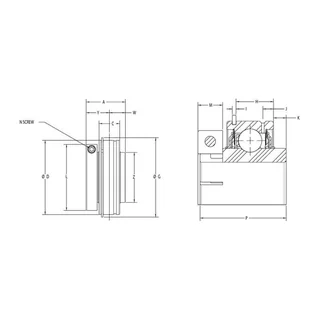
Products with photos in the catalogue
Keep reading
- Dodge Housings: robust solutions for demanding industrial applications
Discover the SC, GT, D-Lok and SXR series of Dodge housings, how to read their code and in which applications they stand out. We help you choose the right housing for your equipment.
- How to Read Dodge Codes and Designations
Dodge codes follow a logic that combines product type, series, and size. We explain the structure so you can identify the correct part and get a quote without errors.
- Dodge by Industry: Where It's Used, How to Select It, Assembly and Maintenance for Long Life
We review the most common applications of Dodge products in Argentine industry and give you key tips for selection, assembly and maintenance to extend their service life.
Continue here
Need a quote?
Send us the code, size or a photo of the part and we'll quote you shortly.