
Blog
How to read RINGSPANN codes: designation structure, prefixes, suffixes and real examples
Practical guide to understanding RINGSPANN product nomenclature: what prefixes, numeric series and suffixes mean in shaft-hub connections, couplings, freewheels and more.
Technical team at MR Accesorios Industriales · Updated on September 28, 2026
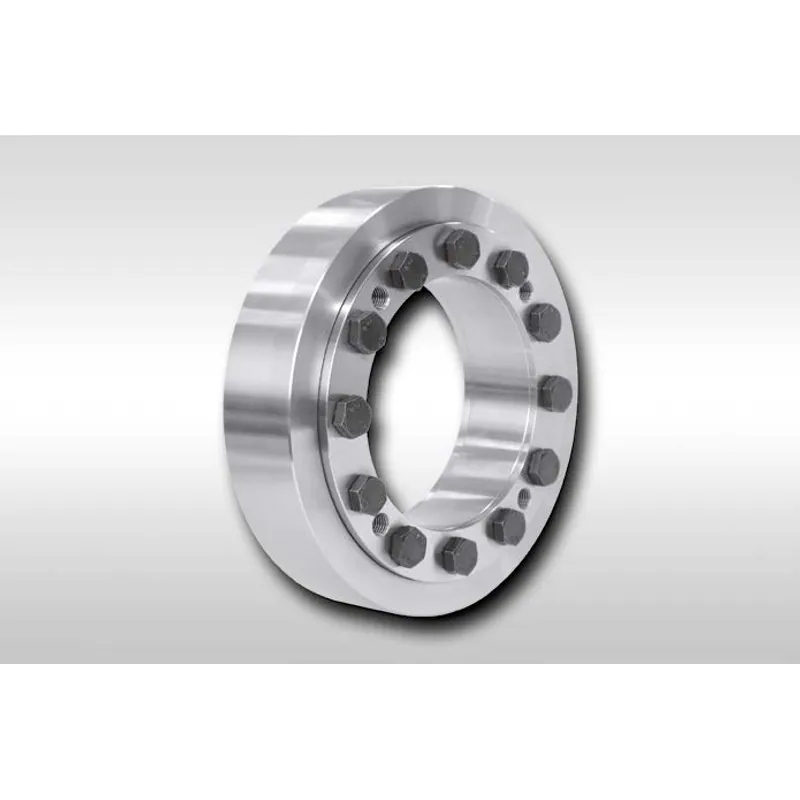
General structure of a RINGSPANN code
RINGSPANN codes combine letters and numbers to uniquely identify each product. Letters usually indicate the series or type of component, while numbers provide information about size, shaft diameter or torque capacity. Understanding this logic allows you to quickly identify whether a part corresponds to a shaft-hub connection, a coupling, a freewheel or a torque limiter.
There is no single pattern for all lines: each category has its own convention. Therefore, when looking for a spare part or a new piece, it is essential to work with the complete code as it appears on the plate, manual or original order. A misinterpreted digit can lead to an incompatible component.
At MR Accesorios Industriales, as exclusive representative of RINGSPANN in Argentina, we help you confirm the exact reference. If you have doubts about the designation, you can send us a photo of the part or the catalog and we will quote you promptly.
Prefixes: the key to identifying the product line
Alphabetic prefixes are the gateway to RINGSPANN nomenclature. For example, codes beginning with SKDZ or RDZ correspond to couplings, while those starting with FN or FB identify freewheels. In precision clamping systems, prefixes such as BKDI or BKDF are common.
In the case of shaft-hub connections, codes are usually long numeric strings, such as 1051-039002 or 1052-084001. The first block (for example, 1051 or 1052) indicates the series or design, and the second block is a sequential identifier of size or variant.
Knowing the prefix gives you an idea of the component's function, but it is not enough to order a spare part: you always need the complete code. If you only have the prefix, we can help you identify the series and available options.
Numeric series: what the numbers in codes indicate
Numbers within RINGSPANN codes usually refer to key dimensions. In couplings such as SKDZ 10 or SKDZ 20, the number indicates the coupling size, which relates to the maximum shaft diameter and transmissible torque. In freewheels such as FN 8 or FN 60, the number is linked to the inner diameter or the size of the assembly.
In torque limiters, such as PA 50 or PA 75, the number may refer to the adjustable torque range or the body size. It is important not to assume that the number is a direct measurement in millimeters: each series has its own correspondence table.
To confirm the exact meaning of a number in a code, it is best to consult the RINGSPANN technical catalog or contact us. At MR we work with all lines and indicate the correct alternative for your application.
Suffixes and variants: additional letters that mark differences
Some RINGSPANN codes include suffixes that indicate special versions. For example, in RDZ 0100 DTO, the suffix DTO may indicate a particular coupling configuration, such as a design with conical hub or a specific surface treatment. These details are critical to ensure compatibility.
In precision clamping systems, suffixes can differentiate versions with or without flange, as in BKDI 6 and BKDF 6. The final letter is usually the one that changes, and omitting it can result in a component that does not fit the original assembly.
Whenever you have the complete code, including suffixes, identification is much safer. If the code is blurry or incomplete, a photo of the part and the assembly context helps us reconstruct the reference.
Real examples of codes by category
So you can see the variety, here are some real RINGSPANN codes. In shaft-hub connections: 1051-039002, 1051-067001 and 1052-084001. In couplings: SKDZ 10, SKDZ 20 and RDZ 0100 DTO. In freewheels: FN 8, FN 60 and FB 72.
In precision clamping systems: BKDI 6, BKDF 6 and BKDI 7. In torque limiters: PA 50, PA 75 and PA 20. These examples show how each category has its own format, but all share the logic of prefix + number + possible suffix.
If you have a similar but not identical code, don't discard it: it may be from another series or size. At MR we help you cross-reference and find the correct equivalent within the RINGSPANN portfolio.
How to use the code to get a quote for your part
To get a quote for a RINGSPANN product, the most efficient way is to send us the complete code via WhatsApp or email. If you can also indicate the shaft size, required torque or a photo of the part, even better. With that information, we will respond promptly with the proposal.
You don't need to decipher all the nomenclature: the code is enough. But if you have doubts about whether it is the correct part, we can advise you. We work with all categories: shaft-hub connections, couplings, freewheels, precision clamping systems, torque limiters, remote control systems, cardan shafts and industrial brakes.
We are exclusive representatives of RINGSPANN in Argentina, from Buenos Aires we serve the entire country. Write to us and we will quote the component you need, with the guarantee of origin and the technical support of the brand.
Common mistakes when reading RINGSPANN codes
One of the most frequent mistakes is confusing the letter O with the number 0, or the letter I with the number 1. In codes such as RDZ 0100 DTO, the 0 is numeric, but in other contexts there may be similar letters. Always verify against the plate or manual.
Another mistake is assuming that the number indicates a direct measurement in millimeters. As we saw, in FN 60 the 60 does not mean 60 mm diameter, but corresponds to a size within the series. Using the number as a measurement can lead to ordering an incorrect part.
It is also common to omit suffixes or confuse similar series, such as BKDI and BKDF. If you have the slightest doubt, consult us: we help you confirm the exact reference before you place the order.
Frequently asked questions
What do the letters in RINGSPANN codes mean?
The letters at the beginning of the code identify the series or product type. For example, SKDZ and RDZ are couplings, FN and FB are freewheels, BKDI and BKDF are precision clamping systems, and PA are torque limiters. The final letters may indicate specific variants.
How do I identify a RINGSPANN shaft-hub connection?
Shaft-hub connections usually have long numeric codes, such as 1051-039002 or 1052-084001. The first block indicates the series and the second the size or variant. If you have doubts, send us a photo of the part and we will help you identify it.
Can I use only the number of the code to order a spare part?
No, you always need the complete code, including letters and suffixes. The number alone is not enough to identify the part, since different series may use similar numbers. If you only have the number, we can help you trace the reference.
Where do I find the code of my RINGSPANN product?
The code is usually engraved on the part, on a label or on the equipment plate. It also appears in the manual, the original invoice or the delivery note. If you can't find it, a clear photo of the part may be enough for us to identify it.
Is MR Accesorios Industriales an official RINGSPANN representative in Argentina?
Yes, MR is the exclusive representative of RINGSPANN in Argentina. We work with all product lines and quote any reference promptly. Write to us via WhatsApp or email with the code and we will respond.
Continue here
Need a quote?
Send us the code, size or a photo of the part and we'll quote you shortly.