
Blog
Tsubaki by industry: where it is used, how to select it, assembly and maintenance to make it last
We review the most common Tsubaki applications in Argentine industry, selection criteria according to component type, and good assembly and maintenance practices to extend service life.
Technical team at MR Accesorios Industriales · Updated on September 28, 2026
Tsubaki in Argentine industry: typical applications
Tsubaki roller chains are found in agricultural machinery drives, bucket elevators, slat conveyors and mill drives. In the food industry, stainless steel or specially treated versions withstand frequent washdowns and sanitary requirements.
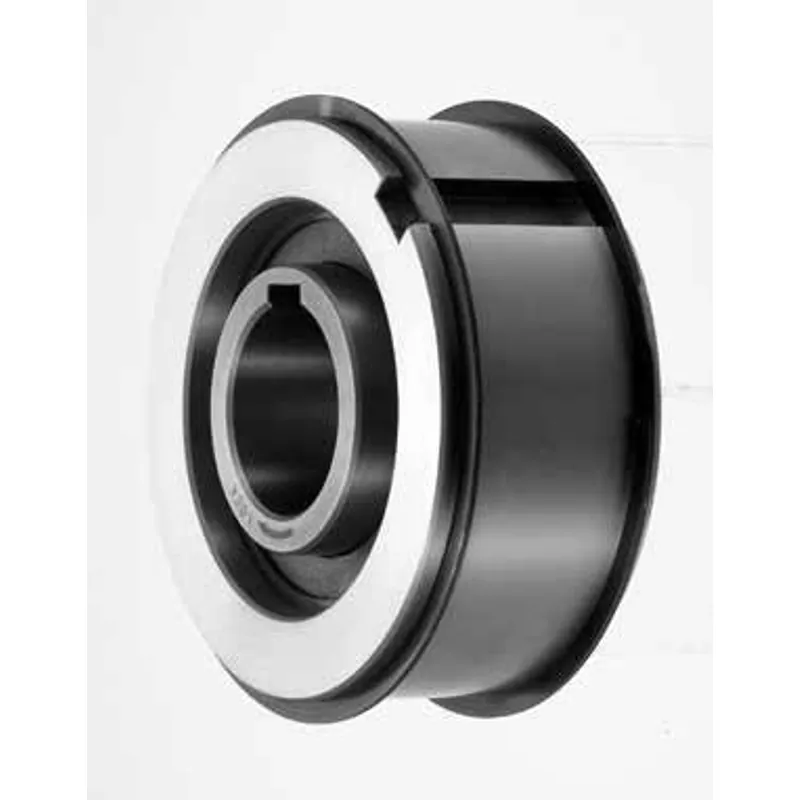
Tsubaki freewheels are used in systems where the shaft must rotate freely in one direction and lock in the other, such as motor starters, inclined conveyor belts or pumps. Couplings appear in centrifugal pumps, compressors and gearboxes, where misalignments and vibrations need to be absorbed.
Conveyor chains and leaf chains are chosen for furnaces, dryers, paint lines and applications with heavy loads or high temperatures. In all cases, correct selection depends on load, speed and working environment.
How to select a Tsubaki roller chain
To choose a roller chain, you must define the power to be transmitted, the rotation speed and the diameter of the sprockets. With these data, the working load is calculated and compared with the chain capacity. Tsubaki offers standard series such as RS (for example, RS60 or RS25) and special versions.
In applications with impacts or sudden starts, chains with additional heat treatment or from the WA series (such as WA-2), designed for heavy duty, should be used. Lubrication must also be considered: a well-lubricated chain lasts much longer than a dry one.
If the chain works outdoors or in a corrosive environment, special materials or coatings can be chosen. It is always advisable to consult the manufacturer's catalog and, when in doubt, request technical advice.
Tsubaki freewheels: selection and assembly
Tsubaki freewheels are selected according to the torque to be transmitted, the rotation speed and the type of assembly (on shaft, with support bearing, etc.). Models such as MZ17 or MZ35 are common in low and medium speed applications, while the LD series (for example, LD08) is used in high speed cases.
Assembly must be done carefully to avoid damaging the drive elements. It is key to respect the rotation direction indicated by the manufacturer and ensure correct alignment with the shaft. Poor alignment causes premature wear and failures.
In maintenance, it is recommended to periodically check play and operating temperature. If the freewheel slips or locks, it must be inspected immediately to avoid major damage to the equipment.
Conveyor and leaf chains: selection criteria
Tsubaki conveyor chains (such as M 28, M 56 or M 20) are used in drag conveyors, elevators and material handling applications. Selection depends on the load per meter, the chain speed and the type of material to be conveyed.
Leaf chains (for example, BL 544, BL 823 or BL 466) are used in traction applications, such as cranes, forklifts and machine tools. They withstand high loads and have a compact design.
In both cases, it is essential to calculate the working tension and verify that the chosen chain has an adequate safety factor. The environment must also be considered: high temperatures, dust or humidity may require chains with special treatments.
Tsubaki couplings: absorption of misalignments and vibrations
Tsubaki couplings (such as CR4016, CR5016 or CR5014) are used to connect machine shafts, transmitting power and absorbing angular, parallel and axial misalignments. This reduces loads on bearings and extends equipment life.
Coupling selection is based on the torque to be transmitted, shaft diameters and the type of misalignment expected. Rotation speed and available space must also be considered.
Assembly must be carried out following the manufacturer's instructions, respecting misalignment limits and verifying that fastening screws are properly tightened. A poorly installed coupling generates vibrations and premature wear.
Preventive maintenance to extend service life
Maintenance of Tsubaki components is key to avoiding unplanned stoppages. In chains, tension, sprocket alignment and lubrication must be checked. A chain that is too tight or too loose wears quickly and can damage the sprockets.
In freewheels and couplings, periodic inspection of the condition of friction elements and elastomers, if present, is recommended. Proper cleaning and lubrication are essential.
A well-implemented preventive maintenance plan, with records of hours of use and working conditions, allows failures to be anticipated and replacements to be scheduled without affecting production.
Get a Tsubaki quote at MR Accesorios Industriales
At MR Accesorios Industriales we sell a wide range of Tsubaki products: roller chains, freewheels, conveyor chains, leaf chains, couplings and torque limiters. We work with the brand to offer you reliable solutions for your industry.
If you need a spare part or are designing new equipment, we quote the Tsubaki component you need. Send us the code, the measurement or a photo of the part and we will indicate the appropriate alternative.
Contact us by WhatsApp or email from Buenos Aires, Argentina. We will respond promptly with the information you need for your project.
Frequently asked questions
What does the RS series mean in Tsubaki chains?
The RS series corresponds to standard roller chains according to ANSI standard. For example, RS60 is a chain with a 3/4 inch pitch. They are suitable for general power transmission.
How do I know which Tsubaki freewheel I need?
You must know the torque to be transmitted, the rotation speed and the type of assembly. With these data, the appropriate model is selected, such as MZ17 or MZ35 for standard applications.
What maintenance does a Tsubaki conveyor chain require?
It requires periodic lubrication, tension and alignment checks, and inspection of wear on links and wheels. In dirty or hot environments, inspection frequency must be higher.
Do Tsubaki couplings absorb misalignments?
Yes, Tsubaki couplings are designed to absorb angular, parallel and axial misalignments, reducing loads on bearings and extending equipment life.
Where can I get a quote for Tsubaki products in Argentina?
You can get a quote at MR Accesorios Industriales, in Buenos Aires, Argentina. Send us the code, the measurement or a photo of the part by WhatsApp or email and we will respond promptly.
Continue here
Need a quote?
Send us the code, size or a photo of the part and we'll quote you shortly.