
Blog
Tsubaki industrial chains: quality, durability and performance for demanding applications
Discover the types of Tsubaki chains we supply: roller, conveyor, leaf, freewheels, couplings and torque limiters. We help you choose the right one for your application.
Technical team at MR Accesorios Industriales · Updated on September 28, 2026
Tsubaki roller chains: reliable transmission
Tsubaki roller chains are the industry standard for power transmission in agricultural, industrial and material handling machinery. Their roller design reduces friction and wear, ensuring a long service life even in demanding conditions.
We work with a wide variety of series and pitches, from light chains such as RS25 to standard pitch chains such as RS60. We also supply double-strand chains such as WA-2, ideal for applications requiring higher load capacity.
When selecting a roller chain, it is key to consider the load, speed and working environment. At MR we advise you to choose the correct pitch and series, and we quote the chain with the exact code you need.
Tsubaki conveyor chains: continuous and efficient movement
Tsubaki conveyor chains are designed to move bulk materials or parts on production lines. They stand out for their robustness and abrasion resistance, making them suitable for industries such as food, cement and mining.
Within this category, we supply models such as M 28, M 56 and M 20, which cover different load capacities and belt widths. Each is manufactured with high-quality steels and heat treatments that extend their durability.
If your application requires a conveyor chain with special features, such as extended pins or attachments, we indicate the most suitable alternative. Send us the code or measurements and we will quote you promptly.
Tsubaki leaf chains: for lifting and traction
Tsubaki leaf chains are mainly used in lifting, counterweight and traction applications, such as forklifts, cranes and textile machinery. They are made up of steel plate links joined by pins, giving them high tensile strength.
We supply models such as BL 544, BL 823 and BL 466, which differ in pitch and breaking load. These chains require periodic lubrication maintenance to prevent premature wear.
When choosing a leaf chain, it is essential to verify the load capacity and safety factor. We help you select the correct chain for your application and quote the exact replacement.
Tsubaki freewheels: one-way rotation control
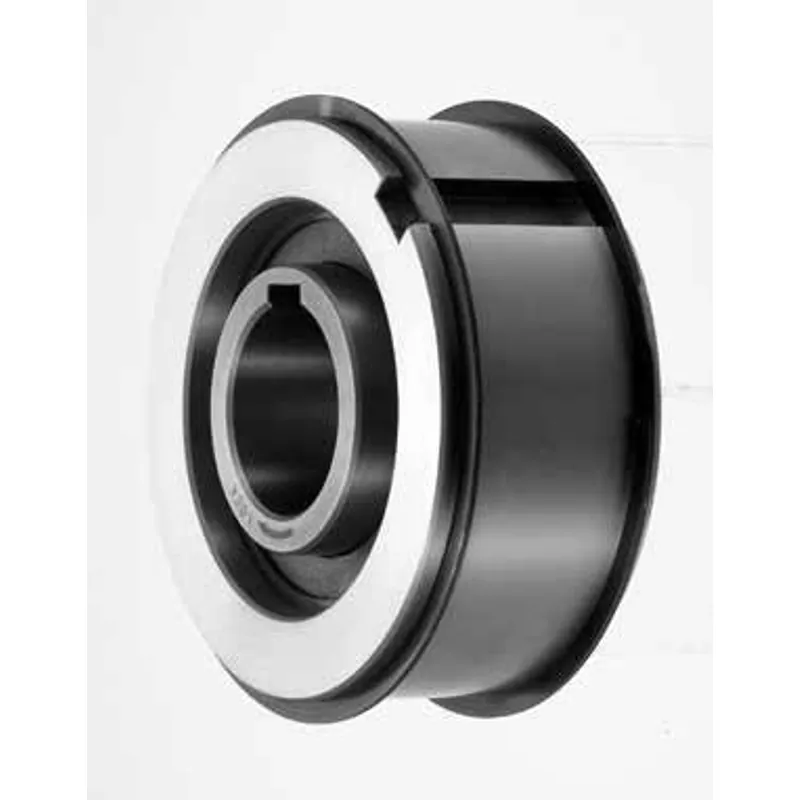
Tsubaki freewheels are devices that allow rotation in one direction and lock reverse movement. They are used in applications such as starters, backstop systems and safety mechanisms.
Within our offer, we work with models such as MZ17, MZ35 and LD08, which cover different shaft diameters and torque capacities. Their compact, high-precision design ensures smooth and reliable operation.
To select a freewheel, it is necessary to know the torque to be transmitted, the speed and the direction of rotation. At MR we advise you with the technical data of your machine and quote the appropriate freewheel.
Tsubaki couplings: flexible and durable connection
Tsubaki couplings connect shafts and transmit power while compensating for misalignments. They are essential in pumps, compressors and gearboxes, where they reduce vibrations and protect equipment.
We supply chain couplings such as CR4016, CR5016 and CR5014, which stand out for their ease of assembly and maintenance. They are manufactured with high-strength materials and accept moderate loads.
When choosing a coupling, power, speed and type of misalignment must be considered. We help you select the correct model and quote the Tsubaki coupling you need.
Tsubaki torque limiters: overload protection
Tsubaki torque limiters protect machinery against overloads and jams, preventing costly damage. They are installed between the motor and the load, and disconnect the transmission when a preset torque is exceeded.
These devices are ideal for applications with risk of blockage, such as conveyors, mixers and agricultural machinery. Their precise calibration ensures a fast and reliable response.
If you need a torque limiter, we quote the appropriate Tsubaki model according to the trip torque and shaft diameter. Send us your application data and we will respond promptly.
How to identify your Tsubaki chain?
Each Tsubaki chain has a coding that indicates its type, pitch and characteristics. For example, in roller chains, the prefix RS indicates standard chain, followed by the pitch in eighths of an inch (RS60 = 3/4" pitch). Conveyor chains use the letter M and a number, and leaf chains use BL.
If you have a used chain, you can measure the pitch (distance between centers of consecutive pins) and the inner width to identify the model. It is also useful to count the number of links.
At MR Accesorios Industriales we help you identify the correct chain from the code, measurements or a photo of the part. We supply Tsubaki chains and quote the exact replacement for your machine.
Frequently asked questions
What types of Tsubaki industrial chains exist?
Tsubaki manufactures roller chains, conveyor chains, leaf chains, freewheels, couplings and torque limiters. Each type is designed for specific applications of power transmission, material handling or machinery protection.
How do I identify my Tsubaki chain model?
You can identify the model by the code engraved on the links or by measuring the pitch and inner width. If you are not sure, send a photo and measurements to MR Accesorios Industriales and we will help you identify it.
What does the Tsubaki chain coding mean?
The coding varies by type. In roller chains, the prefix RS indicates standard chain and the number the pitch in eighths of an inch (for example, RS60 = 3/4" pitch). Conveyor chains use M and a number, and leaf chains use BL.
Where to buy Tsubaki chains in Argentina?
At MR Accesorios Industriales, located in Buenos Aires, Argentina, we supply Tsubaki chains and quote by code, measurement or photo. Contact us via WhatsApp or email and we will respond promptly.
What maintenance do Tsubaki chains require?
Tsubaki chains require periodic lubrication to reduce wear and extend their service life. It is also important to check tension and alignment, and replace the chain if excessive elongation or link damage is observed.
Continue here
Need a quote?
Send us the code, size or a photo of the part and we'll quote you shortly.